All My Homies Hate the Times
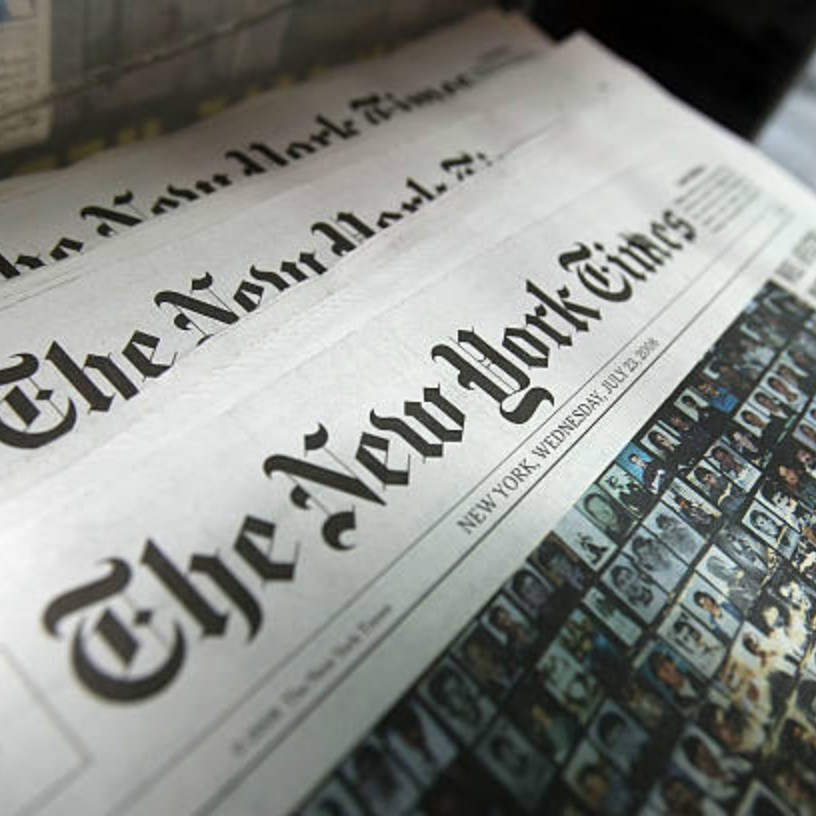
The New York Times’ problems are piling up.
In a 2023 Reuters survey, 29% of respondents said they don’t trust the Times, and a 2025 YouGov poll showed trust in the Times as well below that of WSJ, PBS, BBC and others. The paper faced a large-scale strike from its tech union last year and is under increased scrutiny over coverage of NYC mayor-elect Zohran Mamdani and the genocide in Gaza. Those are just the tip of the iceberg. It’s worth mentioning that, in general, trust in national media has rarely been lower than right now. A Pew research center survey showed that, since March 2025, overall trust in national media has fallen 11 percent.
But it’s not just public perception. NewsGuard, a fact-checking organization whose execs one of the Times’ own veterans, Joyce Purnick, downgraded the Times from a factuality score of 100 (out of 100) to 87.5 “for not distinguishing clearly between opinion and fact.” The reason for the downgrade is alarming. The roots of distrust in the Times are growing further amongst the American left and the Times appears to be making a more noticeable attempt than ever at moving towards the center.
The Times is big enough that avoiding journalistic scandals and ethics nightmares is practically impossible. However, there have been more slip ups recently. In 2023, more than 1,000 Times contributors and subscribers signed an open letter condemning the publication for following “the lead of far-right hate groups” in its coverage of trans kids, which was followed in June of this year by a statement from LGBTQ media watchdog GLAAD. They characterized the Times well, saying: “The Times continues to recycle its inaccurate and biased reporting to support preconceived notions and its fully misguided commitment to inaccurate ‘both sides’ journalism.”
Also this year, NYT published an article about NYC mayoral-elect Zorhan Mamdani claiming he checked the wrong racial identity boxes when applying to Columbia University. The journalists got this information from a known malicious hacker who the Times themselves had reported as “politically motivated.” The article received backlash from other media outlets such as the Verge, saying, “the Times’ racist framing, which implies Mamdani was trying to game the admissions system, is one that plays better with the increasingly racist right-wing ecosystem.” In many NYT comment sections, whose comments are subject to pre-approval, it’s hard to avoid criticism like, “As a subscriber to the New York Times, I remain painfully aware of how this paper’s politics have failed those who would seek progress in American life in every federal election cycle since 2012.”
At Groton, we seem unaware of the increasing skepticism around the Times’ coverage. In 2011, the Times were one of the first major outlets to use an online paywall model. Fast forward to today, nearly every news website has some form of a paywall on it. In fact, 85 percent of Americans (via Pew) report they give up on reading something or finding information if they hit a paywall. At Groton, a New York Times subscription is provided for everyone. It’s the only free subscription provided, and in a survey of the community, 63 percent of people who responded said they read the Times through the school. Fifty-seven percent said they read it more than anything else. The library offers other services, but as Director of the Library Mark Melchior said, “NYT is the only digital newspaper subscription currently available to faculty and students.” In the survey, I also asked what options besides the Times students and faculty may want access to, and the most popular answer was the Wall Street Journal. This was provided as a free option by the school in the 2021–22 and 2022–23 school years, but after inspecting usage numbers, Mr. Melchior “saw that very few community members . . . used the Journal at all.” An additional price hike by the Journal made it completely out of reach for an institution of our size. So here we are, stuck once again with the Times because of what it does well: its size means it has something for everyone. As Mr. Melchior says, “[we] have yet to find a vendor that competes well in terms of breadth of coverage and value proposition.”
So where do we go now? As controversy over the Times’ practices and scrutiny of the American media mount, smaller outlets started by independent journalists such as Tangle, as well as the rise of Substack authors like Heather Cox Richardson have led to an increased personalisation of news in America. Americans aren’t reading the news anymore. They’re reading the opinions of “news influencers,” making it impossible for institutions like ours to provide a source which works for everyone. Now more than ever, we read and learn only what we want to. But very few people rely on the Times like we do, and the school could easily solve our overeliance by providing more sources to broaden students and faculty’s news intake.