Artemis II, The Daring Reignition of Space Exploration
On July 20, 1969, Neil Armstrong became the first man to set foot on the moon’s surface. As he descended from his lander, he said to an audience of over 600 million people: “That’s one small step for man, one giant leap for mankind.”
As the space race came to a close, so did humanity’s exploration of the moon. Since the end of the Apollo program in 1972, no human has ventured more than a few hundred miles from the Earth’s surface.
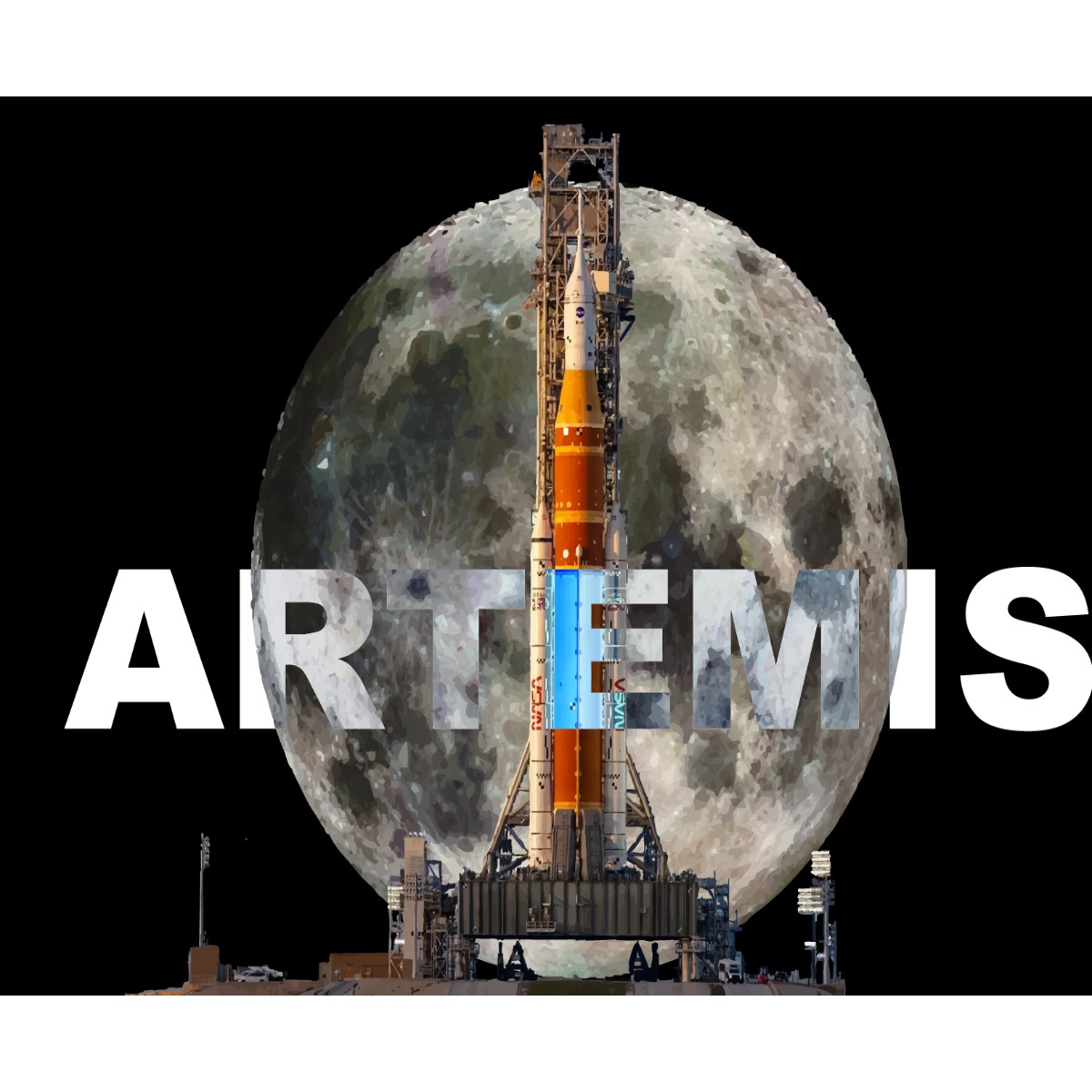
With a launch scheduled for mid-March, NASA’s Artemis II mission seeks to renew human presence on the moon. Founded in 2017, the program hopes to establish a permanent base on the moon and facilitate further interplanetary exploration.
Its crew consists of Reid Wiseman, Victor Glover, Jeremy Hansen, and Christina Koch. Over 10 days, the mission will take the crew of four around the moon, performing a close flyby, although they will not directly land on the lunar surface. As they reenter Earth’s atmosphere, the crew will reach a speed of over 25,000 miles per hour, faster than any human in history.
Sandra Kelly, PhD, faculty sponsor of Groton’s Rocket Club, highlights challenges with building and launching rockets of any scale.
“In terms of model rockets, each phase in the process presents its own set of challenges: designing a rocket to meet the competition specifications is the first,” Dr. Kelly said. Once the rocket is built, the challenges become, as the team is facing right now, having good launch conditions... and keeping the rocket out of the trees, which makes recovery difficult.”
When the Artemis rocket must travel hundreds of thousands of miles instead of hundreds of feet, these challenges go from bothersome to monumental. No amount of calculations can truly prevent technical errors, and some issues, like weather, are simply unavoidable. This was the case on February 3, when a persistent fuel leak called for a comprehensive review and repair lasting until mid-March.
Despite these issues, Artemis II is on track to overcome NASA’s half-century of stagnation in manned spaceflight. Furthermore, its crew marks a shift toward broader representation in space exploration, including the first woman (Koch), African American (Glover), and non-American (Hansen) to explore the moon.
In an interview with California Polytechnic State University, Glover said: “I think it’s important that America’s space program represents the best of America, so for little kids to see someone who looks like them, that’s super important to me . . . ”
Dr. Kelly shared this sentiment.
“As young people see others who look like them doing amazing things, they start to believe they can achieve great things as well,” she said “It is important to have many voices and many faces represented in crews like that of Artemis II because it highlights what we, as humanity, are capable of achieving when we work together.”
Although space exploration requires much time and effort, it benefits all of humanity. NASA’s research has contributed to technology ranging from GPS to CAT scans. Global communication and weather forecasting rely on satellites. Looking far into the future, as we rapidly exhaust Earth’s natural resources, interplanetary expansion may be the only way for humanity to continue thriving.
Artemis II marks humanity’s return to crewed exploration of space, and may herald a new era of interplanetary exploration and settlement. That is one small step for its crew of four, and one astronomical leap for humanity.