Asian American Footsteps Conference
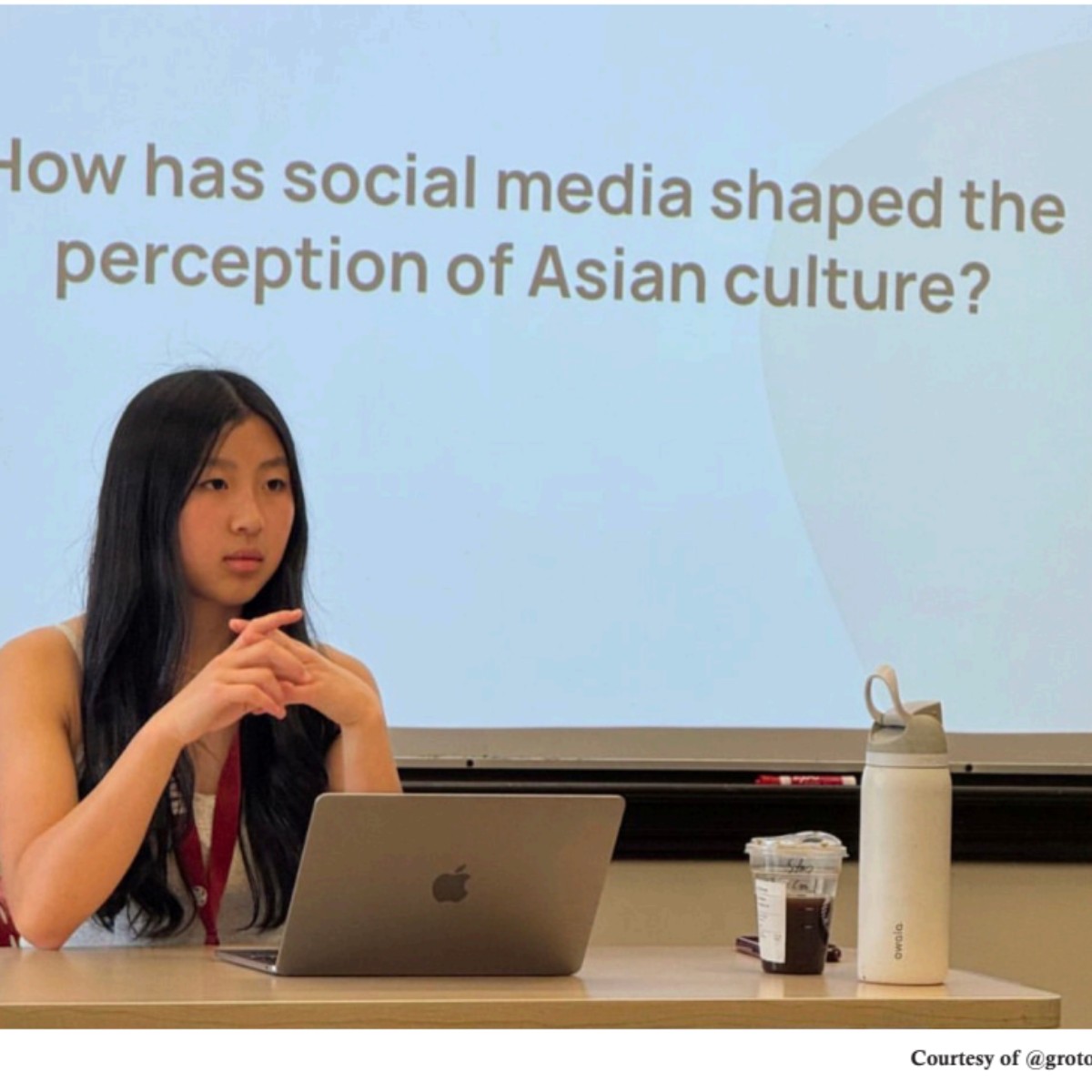
On April 26, the Asian American Footsteps Conference was held at Windsor School in Boston, bringing together Asian and Asian-American students from more than 60 schools in New England. Through a keynote address, affinity groups, free-time activities, and student-led workshops, the conference gave students a space to discuss identity, share culture, and build common ground.
The day began with keynote speaker Josh Chuck, a fourth-generation resident of San Francisco’s Chinatown and the co-director and producer of Chinatown Rising, a documentary he made with his father, Rev. Harry Chuck. The film uses archival footage and present-day interviews to retell Chinatown activism from the 1960s through the 1980s, during which people advocated for bilingual education, tenants’ rights, affordable housing, and ethnic studies. AAFC’s goals aim to contribute to a larger movement of Asian American communities coming together and fostering a sense of belonging.
After the keynote, students gathered in affinity groups to speak with others of similar cultural backgrounds, finding resonance in their challenges and experiences. They then moved into student- or speaker-led sessions focused on specific cultural questions or activities. Alex Doctoroff ’28, who attended various workshops, emphasized that they stood out to him as environments that fostered real connections through discussion.
“You can’t just throw a bunch of people into a room and hope they get along,” he said. “You have to be intentional about creating a space where people feel OK being real with each other.”
Groton students themselves also led some of these conversations, examining topics such as Asian representation in pop culture. Hansen Zheng ’28 and Max Choi ’28 used Attack on Titan, Squid Game, and BTS’s “Dynamite” to discuss the visibility and influence of Asian culture in the West. Visual Arts Department Head Jennifer Ho, who listened to their presentation, noted that pop culture references effectively engaged students and facilitated fruitful discussions on serious topics.
Arwen Zhang ’28 led a workshop titled “You Met Me in a Very Chinese Part of My Life,” which focused on the aestheticization and fetishization of Asian culture on social media. She asked students to consider the difference between appreciation and appropriation, especially when the internet turns Asian food, tourism, and fashion into temporary aesthetics.
“Most people think of appropriation as big gestures of racism, the big stereotypes, but in reality, it often appears as microaggressions that reduce Asian culture to internet trends,” Arwen said. “Trends come and go, and with that, Asian culture gets robbed of its significance and longevity.”
Other workshops taught cultural practices or food directly. Daniel Shi ’29 attended a Chinese traditional painting workshop where a teacher taught the conventional strokes and techniques.
“ I felt connected to my culture better and was introduced to an aspect of history that I didn't really know before,” he said after learning the art.
Daniel attended a workshop on the history of ramen as well, joking that he originally went for the food, but left with a stronger understanding of the simple yet delicious dish.
During lunch, the conference made room for less structured activities, such as playing games on the turf. Sunny Ma ’28 noted that the free time gave her the opportunity to not only reunite with friends from past conferences, but also meet new ones. The connections she fostered at AAFC were the highlight of her experience.
Next year, AAFC will be held at Groton, led by Sunny Ma ’28, Alex Doctoroff ’28, Allyson Lu ’27, and Nikhil Luthra ’27. Teachers and students are still in the midst of planning the event.
“I think while these conferences are really serious and we discuss lots of serious topics and matters, we want to highlight the Asian voice,” Ms. Ho said. “The words ‘energy’ and ‘celebration’ of our cultures are at the forefront of our planning.”
To achieve this, Ms. Ho hopes to incorporate performances, whether it is dancing or singing, and maybe even an art show. Through these activities, she aims to amplify the diversity of the Asian community.