Brainrot and Its Place in Groton’s Legacy
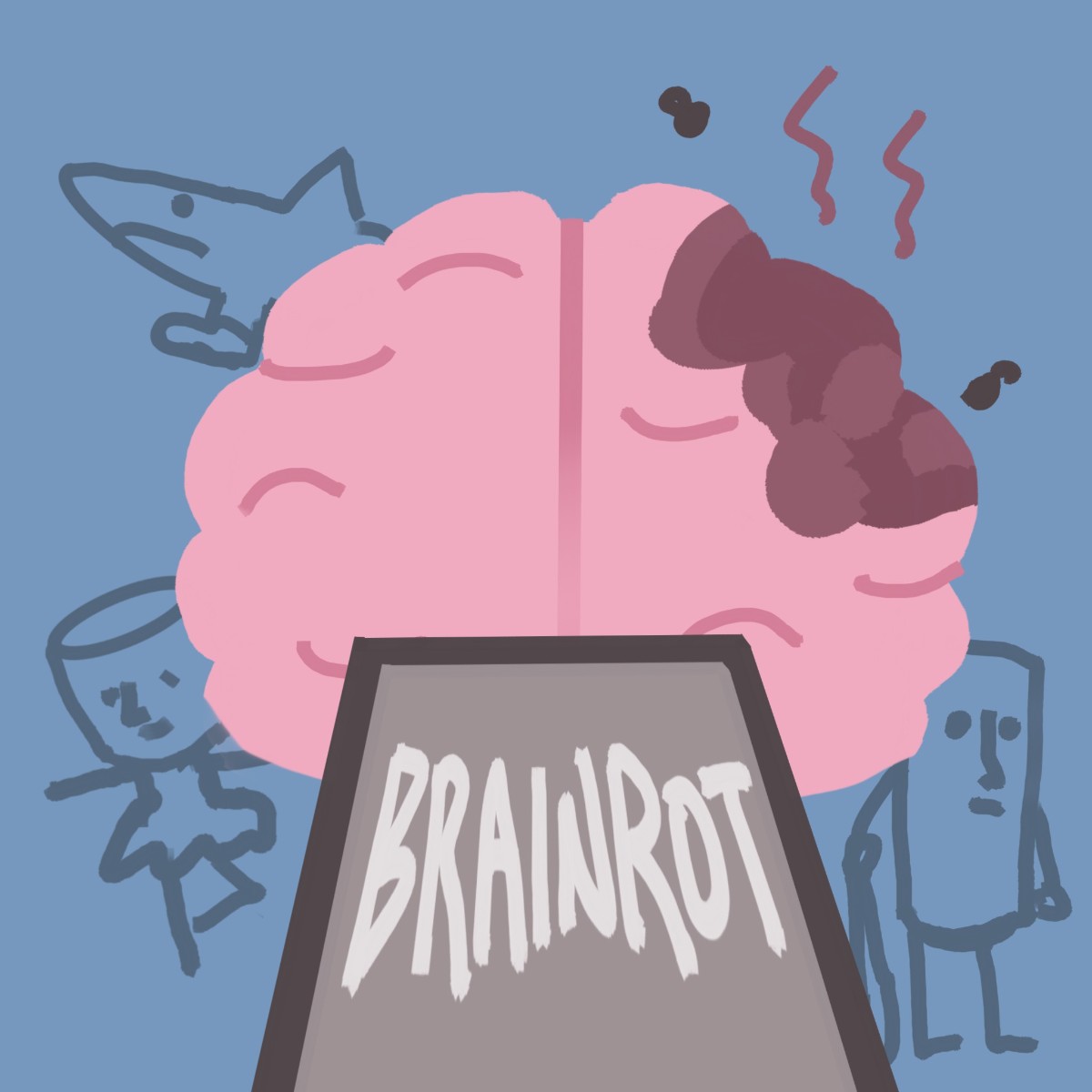
Instagram and TikTok remain some of the most popular apps in the world. Since 2019, these two infamous social media platforms have ranked among the five most downloaded applications on the Apple App Store. It’s no surprise then that our Groton community is facing the cultural impacts of short-form social media usage. Incoherent shouting from Second Form boys, unexplainable Roll Call announcements, and wacky dorm themes are some of the clear examples of Instagram and TikTok’s lasting impact on Groton’s teenage minds. Beneath the surface humor, these performances reveal how brainrot has transformed the fundamentals of the way we communicate and connect at Groton.
The slang term brainrot is defined by the Oxford Dictionary as “the supposed deterioration of a person’s mental or intellectual state, especially viewed as the result of overconsumption of material (now particularly online content) considered to be trivial or unchallenging.” The term has come to indicate any sort of humor of this trivial nature, especially humor rooted in the mindless repetition of some phrase or form of content. Of these, the meme “6-7” is perhaps the most universally recognizable for its pervasiveness despite its lack of a clear meaning. This content, spread through social media apps with short-form video content, could seem incongruous with Groton’s culture of intellectual creativity and academic rigor. However, a deeper investigation of this phenomenon suggests that brainrot has become more than dumb memes: it is emblematic of our tight-knit community. It also happens to be an unusual byproduct of intense academic pressure.
The ultimate reason that most jokes even land at Groton is that nearly every student here spends hours online daily. Groton’s academic expectations and constant pressure create the perfect breeding ground for brainrot. When students feel overworked, they reflexively open social media to decompress, “rotting” for hours at a time. But this coping mechanism can backfire, trapping students in a cycle of procrastination and impounding stress that only makes things worse.
“I think the regular and intense stress normalizes procrastinating on work, and then all that work reduces time for hobbies and recreational activities,” said Fourth Form student David Yu ’28 “So people then reach a period of low stress and immediately turn to social media as they aren't as used to, say, going outside.” It’s important to note that the opposite is also true, where in situations when work is actually finished, Grotonians tend to spend more time on their phones in order to unwind.
On the other hand, the diffusion of brainrot and mass understanding of its key aspects illuminates the powerful social network our school has fostered. No matter the differences in age or form, Groton students unify under the shared feeling of escape that “rotting” offers.
“Everyone knows some of these things. I hear kids scream ‘6-7’ in the Schoolhouse every day,” said Fifth Form student Raphael Aberbach ’27. “It is clear that all Grotonians are susceptible to the influence of social media like TikTok and Instagram.”
A platform like TikTok with reach into the entirety of Groton is the perfect facility for the uniform distribution of entertainment. As a result, it’s particularly effective at placing the same funny videos on phone screens and establishing a shared basis of humor. Brainrot has wormed its way into the social scene at Groton, and it’s not leaving anytime soon. The student body’s ubiquitous “rotting” is further evidence for the tight-knit community that we attempt to foster at Groton, as the taboo humor present on social media too becomes a uniting force for students.