Culture Day
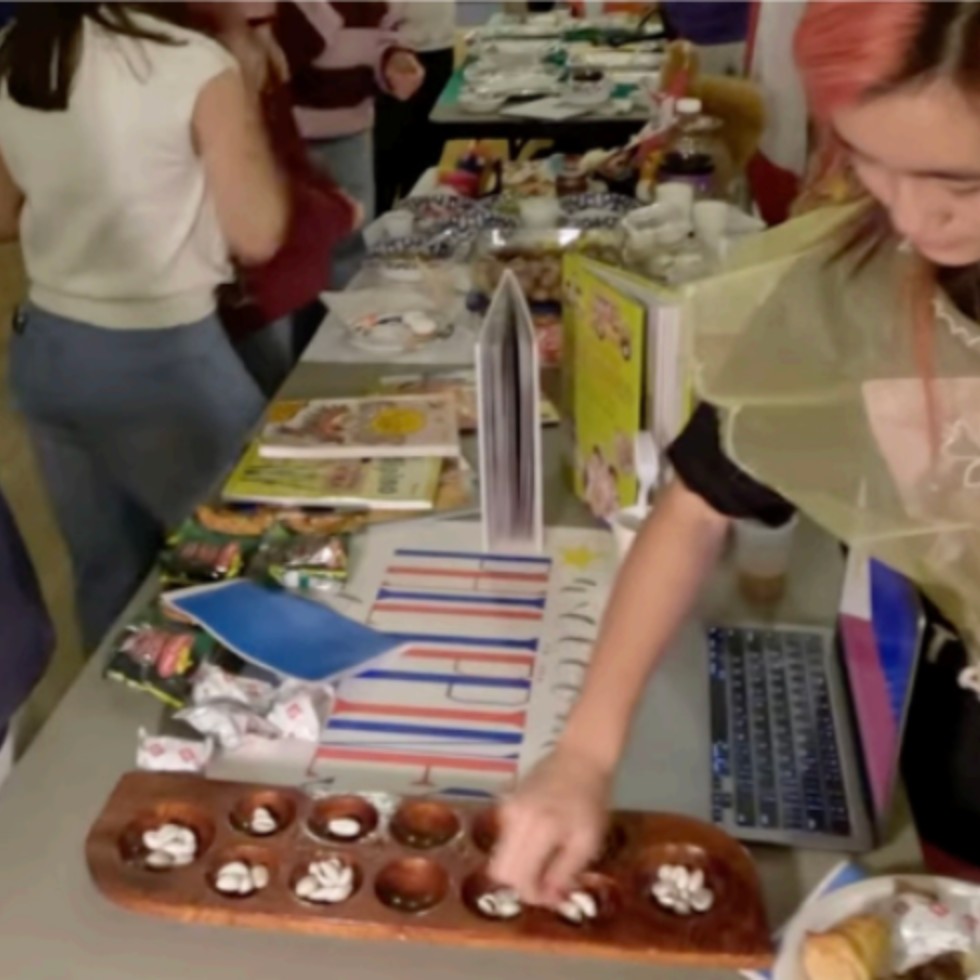
Cultural Day at Groton announces itself before it ever comes into view. The smell of dumplings, empanadas, and spiced curries drifts through the Circle, music overlaps from table to table, and students move quickly. For a few hours, Groton feels louder and warmer than usual.
“The core purpose of Cultural Day has been the same for the past eight years,” World Languages Department Head Rebecca Stanton said. “For students who held a table, it was to share their home with their schoolmates and teachers through food, clothes, games, and music, and to celebrate with their friends and their teachers the richness of their own culture.” The language of “home” appears repeatedly, and deliberately, a reminder of the diverse backgrounds that shape the Groton community.
When asked what moments felt most meaningful, Madame Stanton emphasized the overall energy of the evening rather than any single highlight. “What was meaningful to me was the energy, the laughter, the excitement of the students throughout the evening,” she said. “Everyone seemed to have fun and was curious to learn and to discover what each table offered.”
That curiosity transformed the event from something to observe into something to participate in, reflecting a Groton culture that values intellectual engagement and encourages students to approach cultural differences with openness rather than distance.
Of course, food was central to that exchange. Madame Stanton described Cultural Day as “an evening of [home-cooked] food, games, music, and fun.” Plates of handmade dumplings, fragrant rice dishes, and sweet desserts passed between students, turning the Circle into a space of shared tasting and storytelling.
The food carried memory and labor, connecting students not only to culture but to family. Carina ’27, who represented Chinese culture, said, “I hoped that by the end of the day, people would learn that Chinese culture is rich and diverse. “I know that there are a lot of stereotypes around Chinese culture, and that a lot of it has been twisted and Americanized,” she added. “So it felt good to advocate for traditional Chinese foods and customs.”
Cultural Day allowed her to define her culture on her own terms, and representing her culture publicly was affirming, especially within the “Groton bubble”, where students often live and learn within a shared campus environment that can limit everyday exposure to different cultural contexts.
“I loved it,” Carina said. “I want other people to know where I am from and how I grew up. I was shocked by the number of people who were familiar with Chinese culture. It made me very proud of my heritage to know that my friends appreciate my culture.” Yet Cultural Day’s impact also exposes its limitations.
“At Groton, we are encouraged to embrace our cultures,” Carina said, “but no other event allows us to share them so directly with others.”
If one night can create such openness, we ought to wonder what could happen if that spirit extended beyond a single day on the calendar. What if, through smaller cultural movements, shared meals, and spaces, students could bring parts of home into their everyday lives?
Madame Stanton expressed hope that “the enthusiasm, curiosity, uniqueness, and celebration felt that evening will find a space in the daily life of students at Groton.” By the end of the night, the tables are packed away, and the Circle grows quiet again. But Cultural Day leaves behind a challenge: not just to celebrate culture once a year, but to make Groton a place where home is welcome every day.