Generative AI in Arts
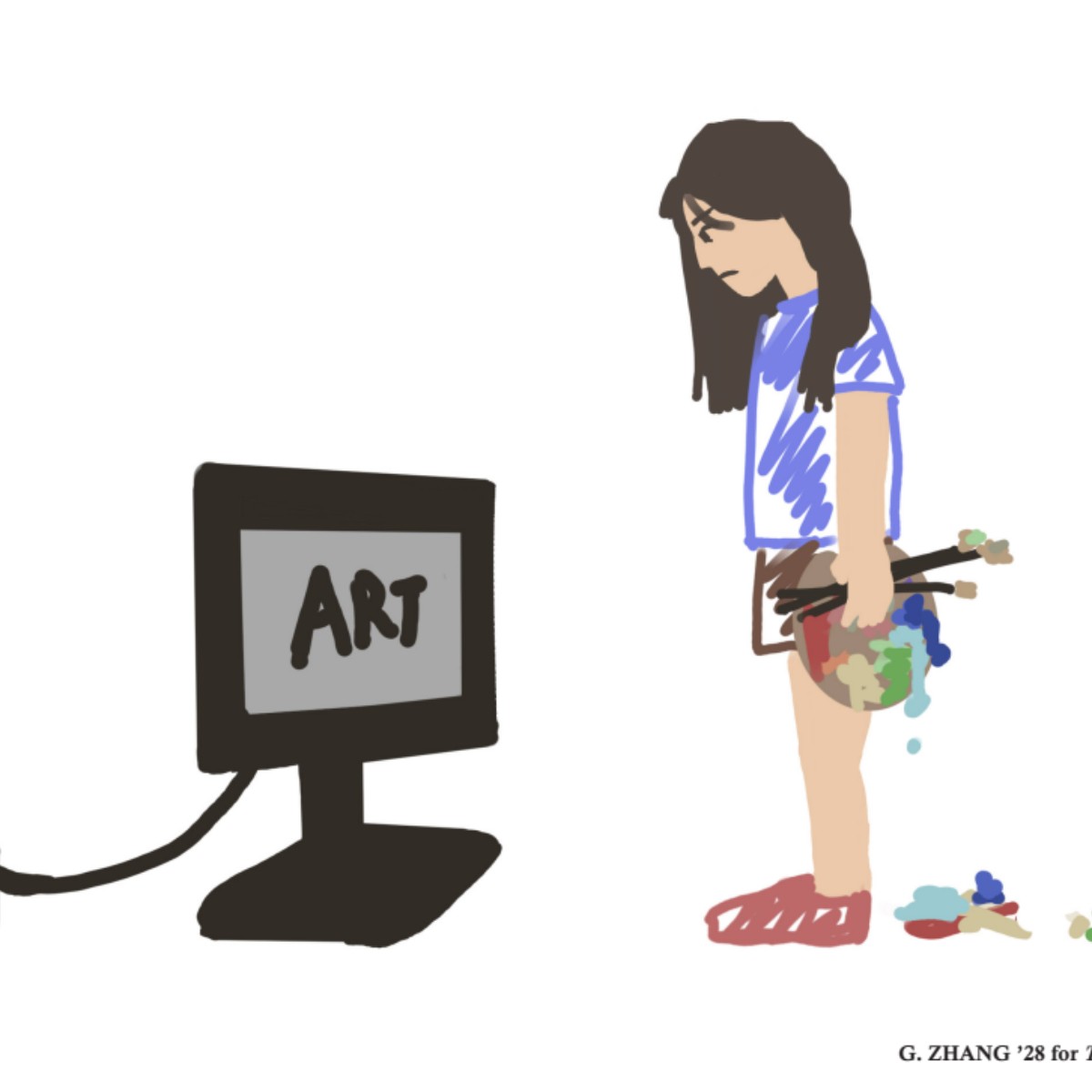
Art has never just been colors on a canvas or finely molded clay. It is the vessel for human catharsis and epiphany, cradling stories of pain and of joy as a means of resistance against censorship, promising the possibility of a brighter tomorrow.
However, as generative AI becomes more prevalent in society, it begins to spill over into the world of art. Artists and their works are increasingly impacted by the lack of copyright laws surrounding AI, enabling mass exploitation of copyrighted works to be used without consent which leads to numerous lawsuits.
Generative AI takes inspiration from copyrighted images, analyzing patterns and designs to replicate different works and output art. Copyright laws attempt to protect artists’ intellectual property, but with the uprising in AI, these laws favor big AI companies. As AI advances, originality distorts.
The fears surrounding generative AI are demonstrated by current artists. Yuko Oda, a multidisciplinary artist with a focus on eco-centric portrayals of culture, was the Spring 2026 visiting artist in the Brodigan Gallery. Her works depict a range of creatures, from iridescent ladybugs and boldly blossoming flowers to soaring cranes and shy hummingbirds. Despite having a style that distinguishes her from other artists, she fears becoming forgotten and discredited due to the unyielding popularization of AI art.
When asked about her approach to art, Oda recalled the joy that the creative process brings her. “Every time I make art, I become more excited to use my imagination to think and to create something new,” she said. “But AI takes that excitement away from so many artists. That convinced me even more that I should stay away from it. I think we should make AI art illegal altogether, like Australia recently did. It takes away so much of our hard work and struggle without any of the credit.”
Recent court cases, including Anderson v.s. Stability AI Inc., Midjourney AI Inc., DeviantArt Inc., where artists Sarah Anderson, Kelly McKernan, and Karla Ortiz filed a suit against various generative AI art platforms, on the grounds of copyright infringement, the misuse of art for “training purposes”, and more. All of the plaintiff’s claims were dismissed save for the copyright infringement claim by Anderson, who then had her name added to ihavebeentrained.com, a platform that aims to credit training media, as a form of citation.
The repercussions of generative AI art are not limited to current artists, but aspiring ones as well. Student artist Olivia Engstrom ’26 reflects upon the multidimensional aspect of being able to produce art with a single prompt.
“I think it may limit the creative processes of younger artists as they may not learn the same creative process and instead rely on something else to come up with ideas for them,” Olivia said. “This could then lead to the art being less authentic to them as a person . . . but we can encourage younger students to think for themselves in any form of studio and teach them the value of honoring your own skills and abilities by trusting yourself.”
\