
Groton School Installs Security Camera Network On Campus
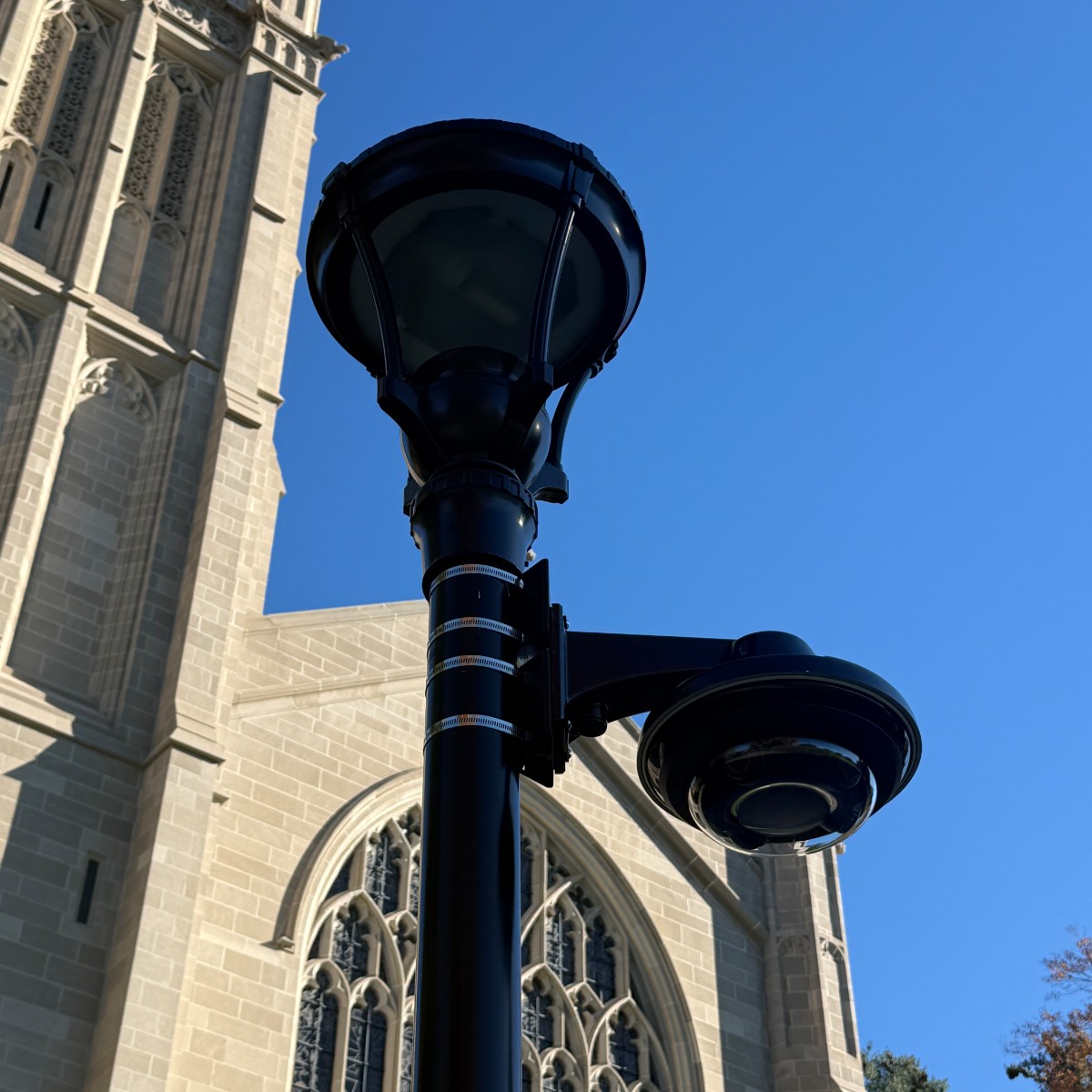
Over the past summer, the Groton School administration installed an array of surveillance cameras across campus, spurring controversy among students and faculty on the tenuous relationship between privacy and security. School leaders, meanwhile, say campus security has always played an important role in helping keep the Groton community safe, and that the cameras are just the latest upgrade to that effort.
“When you step on our campus, you’re in our care,” said Dean of Students Timothy LeRoy. “At the end of the day we feel that the cameras will keep our students and faculty safe.”
The cameras are positioned in public-facing spaces around campus, such as the Chapel, Hundred House, and Schoolhouse. According to the Deans’ Office, they are designed to record active motion without sound, filling in blind spots of the previous system. Citing security concerns, Chief Financial Officer Jay Herlihy declined to share how many cameras were installed, saying the number was “sufficient to provide proper security” to the community.
“We’ve had security cameras for a while now. What we’re trying to do is improve the system because the technology degrades over time,” said Mr. Herlihy.
Within the past four years, Groton installed four street-facing license plate readers manufactured by Genetec Inc., which allowed security to see visitors and potential intruders entering at the main gates. The Deans explained that, once subjects reached the middle of campus, however, there was no visibility.
Thus, as part of a greater initiative to improve campus safety, senior Groton School administration—including Headmaster Temba Maqubela and his leadership team—considered cameras to be a logical next step and proposed a plan that was ultimately approved by the Board of Trustees, said Mr. Herlihy. The Groton School Student/Parent Handbook was updated over the summer to include a statement about the use of the cameras on page 36. Yet, the matter was never explicitly communicated to the student body or faculty members, raising concerns among some members of the community.
“The total ambiguity surrounding the installation of the cameras and the fact that their appearance went unaddressed shows how out of the loop students really are,” said one Sixth Former.
Other students and faculty members shared concerns with The Circle Voice, expressing anxiety that the cameras may be used to scrutinize their daily movements for violations of school rules, lowering the level of intrinsic trust on the Circle.
“This is more than a place where we work,” said one teacher, who asked to remain anonymous. “This is a place where our families live. Although we understand that we need security, we need to know why, where, and what they plan to do with the cameras. In the Groton Handbook it is a bit vague.”
In light of these concerns, the administration says that the privacy of community members is still being protected. According to Director of Technology Dean Ellerton, the footage is fully encrypted and deleted on a rolling 30-day or 60-day basis. Avigilon, the video surveillance and security company that Groton purchased the cameras from, is a familiar vendor: they have managed OpenPath, Groton’s door access control system, since 2021.
Both Mr. Herlihy and the Deans’ Office acknowledge that national trends of campus violence, like last year’s fatal shooting at Brown University, set many extra security precautions into motion. The cameras join the installation of new sirens for lockdown drills and the addition of a peer-aged visitors form as new safety measures for the 2026–27 school year, they note.
The Deans also stress to students that the cameras were not installed with the explicit goal of justifying disciplinary action: security systems will not be actively monitored. However, they do acknowledge that footage may be retroactively reviewed to gain additional context in disciplinary situations.
“The cameras are primarily for safety, but they can be used for discipline,” said Dean LeRoy. “We’re not constantly watching the cameras, but when things are brought to our attention and we need a better understanding of what happened, we will look at them.”