Many Traditions, One Community: Groton’s Holiday Season Unwrapped
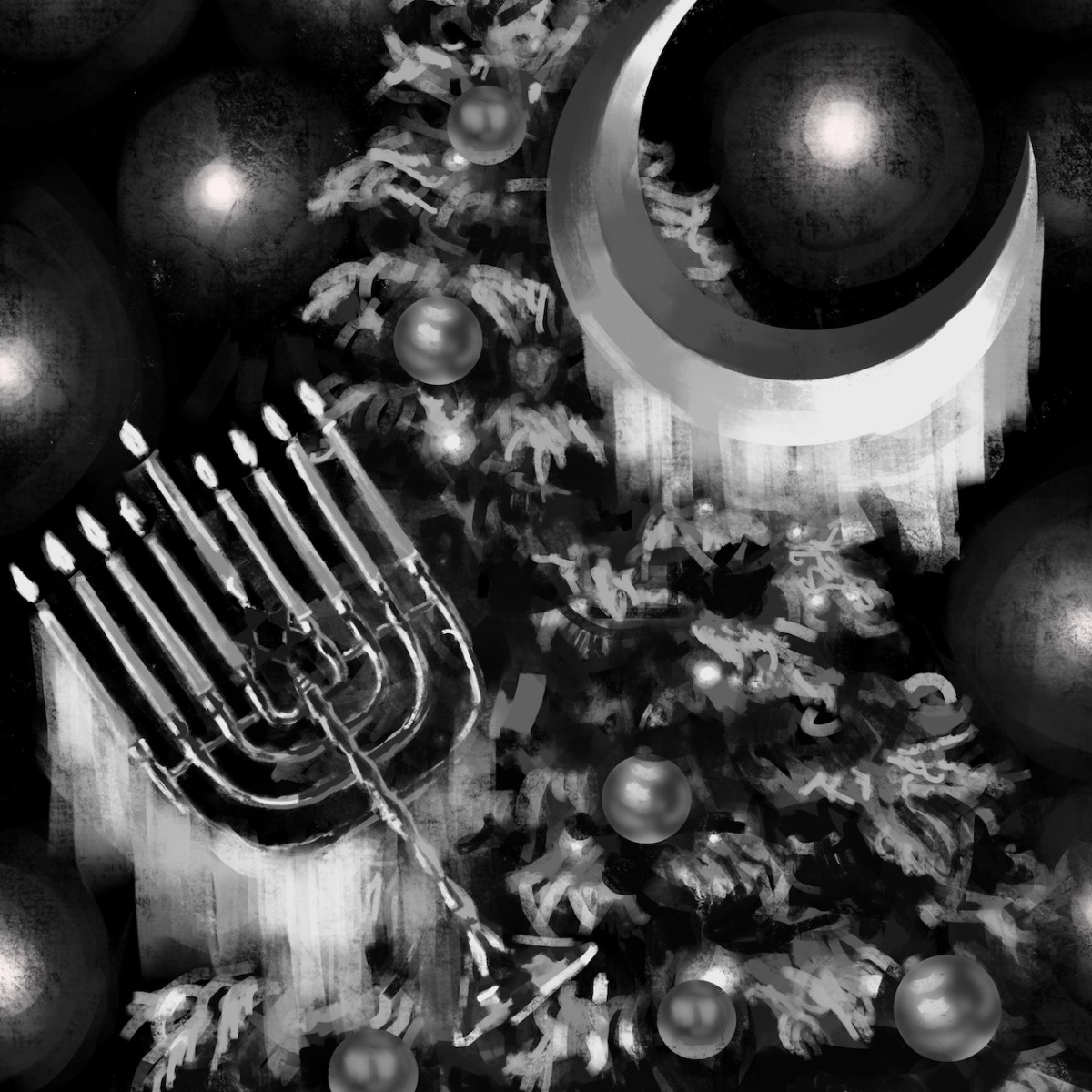
As winter settles over Groton, the “two weeks” mark a brief yet eventful return to campus packed with festivities. Whether it’s Groton Pops, Lessons and Carols, decorations around campus, or singing “The Twelve Days of Christmas” in Chapel, there’s no shortage of holiday cheer. While these celebrations foster a strong sense of community, it is important to note that the holiday season takes on a distinct look and feel unique to each person.
Therefore, as a community representing 24 distinct countries, it’s worth asking: with Christmas taking center stage on campus, what might we be leaving out, and how can we make room for students to showcase their own traditions?
To begin understanding this question, a survey was sent out to the student body with five questions relating to what, how, and why students celebrate the winter holidays. Some of the memories and traditions that students listed include but are not limited to: making gingerbread houses, hiding pickles in the Christmas tree, playing Monopoly, snowball fights, decorating the street with lights, baking meringues, watching Christmas movies, making latkes, attending religious services and even tracking Santa on santatracker.com.
Among the 31 responses, several students shared how they celebrate multiple holidays. One student noted, “Since my family is Hindu, we purely celebrate Christmas from a gift-giving aspect, as we do not attend church or anything. However, we still treat it as a time of reflection and community.”
Another reflected on their first experience celebrating Eid on campus: “My family celebrates Eid with a religiously mandated prayer followed by a lot of food, gifts to each other, and a large family gathering. Last year, I spent Eid at school during preseason, so Dr. [Celene] Ibrahim took me out into Boston to a mosque to pray.”
Some shared how overlapping traditions shaped their holidays. One said, “I was raised Jewish and I had a Bat Mitzvah, but my mom grew up Christian so she still likes to celebrate Christmas even though we don’t do anything Christian other than that.”
The majority of respondents celebrate Christmas, yet each had their own experience. One said, “Christmas is big in my family. We go to Midnight Mass on Christmas Eve, so there is a religious component, but it mainly feels like a family and cultural affair. Growing up in New England, Christmas felt like the last bit of light before the bleak winter came.”
When asked “from a scale of 1–5, how much do you feel Groton embraces your specific holiday,” more than 30 percent of students responded with a 3 or below. One student expanded on this idea: “I think that the ‘holiday spirit’ is a luxury afforded to those who celebrate Christmas. Surrounding holidays are roped in for the sake of it and the actual religious importance of other holidays that take place during the rest of the winter for religious minorities are forsaken.”
This perspective illustrates a disparity in how holidays are recognised on campus, with some feeling that Christmas dominates celebrations while other religious and cultural observances are often minimized or tokenized. These dynamics demonstrate that inclusive practices must go beyond symbolic representation to genuine engagement.
Whether you celebrate Christmas, Hanukkah, Kwanzaa, Three Kings Day, Saint Nicholas Day, Eid, any other winter holiday, or even none of the above, the holiday season is a time for reflection, gratitude, and connection. These are all values that Groton strongly embraces; therefore we must find a way to weave together a holiday season that is both vibrant and deeply reflective of our global community.