Omnes Summa Cum Laude
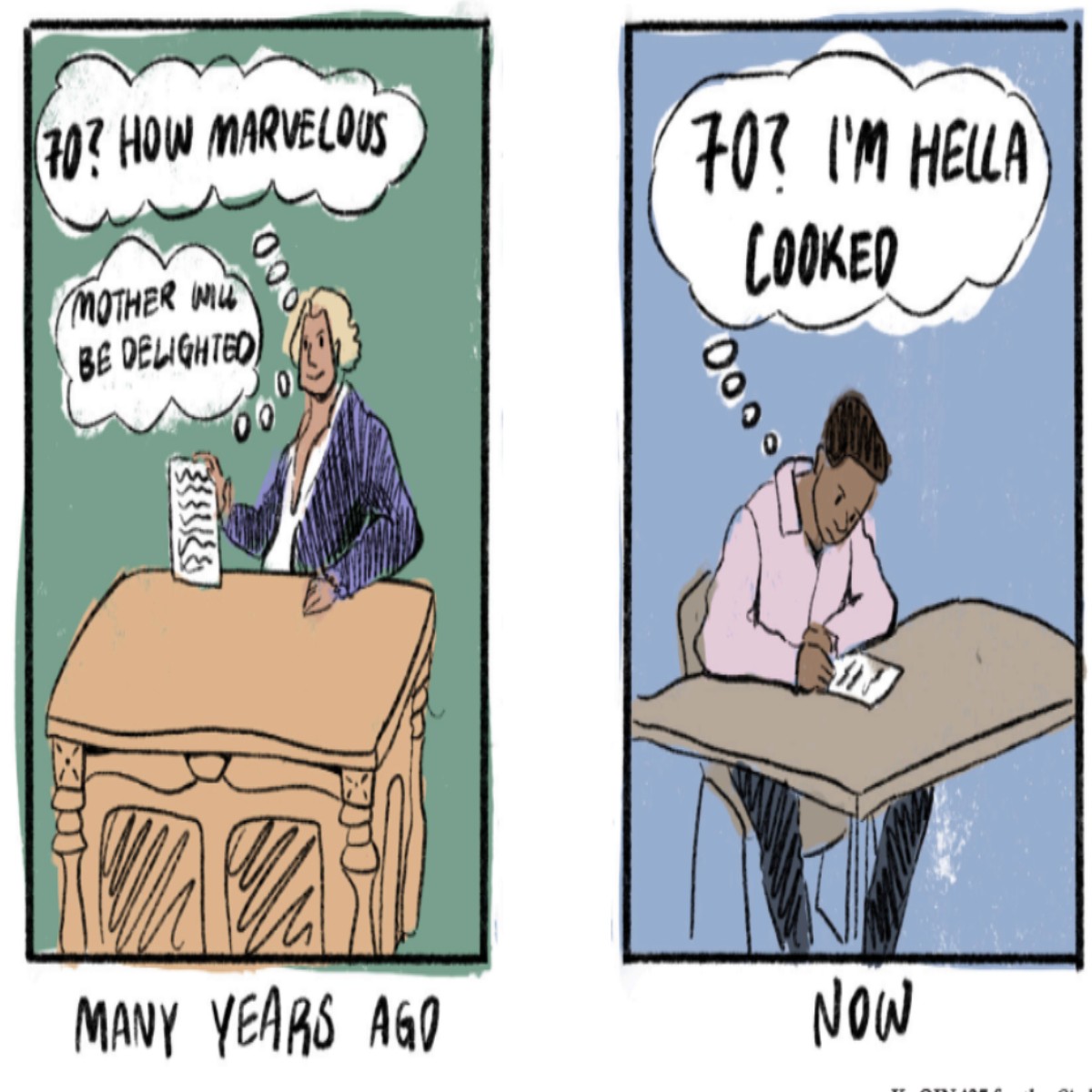
Cameras flash. Cheers erupt. Boater hats shoot into the air. But before that, Mr. Maq classifies every member of the graduating form into tiers of academic excellence: Summa cum Laude, Magna cum Laude, Cum Laude, and then . . . nothing, the last of which we seldom hear on Prize Day. These honors were meant to mark scholarly distinction.
But as of late, the distinction is disappearing.
The cause? Grade inflation.
Grade inflation has been afflicting Groton for some time now. Historically, science faculty member David Black ’80, PhD, recalls that most Groton students graduated with no academic honors, some with magna, and only a few with summa. Today, the totem pole has been inverted, with the majority of students graduating with honors. Dr. Black admits that Groton’s high standards aren’t properly reflected in grading, that this inflationary trend is a problem that “Groton needs to take on.”
Inflation is not unique to private boarding schools and has also infected elite universities. At Harvard, Dean of Undergraduate Education Amanda Claybaugh told the New York Times last year that the number of A grades surged from 40 percent in 2015 to 60 percent in 2025. Similar upward trajectories can be observed at other Ivy Leagues, but this phenomenon is not limited to them. The National Center for Educational Statistics revealed that, at all colleges, average GPAs went up from 2.81 to 3.15 between 1990 and 2020.
Grades are not soaring because students are smarter. In fact, the data indicate the exact opposite. Between 1998 and 2016, the percentage of high schoolers with an A average skyrocketed from 38.9 percent to 47 percent despite average SAT scores dropping from 1026 to 1002. Students who are performing worse on standardized testing are, at the same time, shooting up their GPAs. This is a logical absurdity caused entirely by grade inflation. The psychology behind grade inflation is not hard to see. On the one hand, it panders to consumer demands. High grades look good to college admissions, and families investing exorbitant sums of money into their kids’ education expect a return on investment.
On the other hand, grade inflation is seen as equally desirable to institutions and their faculty. Some wrongly believe that a top-heavy GPA distribution will lead to glowing matriculations, which in turn preserves institutional prestige and entices future applicants. For faculty members, particularly freshmen faculty in itinerant or precarious positions, easy grading avoids pressure from the administration, parents, and even students—an effect the Harvard Classroom Social Compact Committee (CSCC) also identifies.
In spite of the immediate benefits afforded by grade inflation, the continuation of these inflationary trends will result in a death spiral. Some of the fallout is already being felt. The homogenization of grades reduces the effectiveness of the transcript as a differentiator. It also flattens student achievement and reduces effort. And when meritocracy crumbles, we get a culture of fragility and toxic grade fixation where students can’t tolerate anything other than “perfect” grades, “perfect” results, which, in the real world, simply don’t exist. One antidote to grade inflation is a forced curve. Harvard is among the pioneers of such an approach. In October 2025, the Office of Undergraduate Education at Harvard issued a mandate of 20 percent on the total number of “A” grades awarded in any given class. For smaller courses typically attended by more advanced students, Harvard also instituted the “+4,” which adds four more “A’s” to the cap, making 24 percent. Contextual grading—a system where class median, mean, and internal rank are provided as separate values—is another compelling remedy. Provisions of these nuances offer a clearer picture of how student performance compares to peers, thereby also illuminating the difficulty of course offerings.
Graduating with honors should be a privilege, not a participation trophy. Not everyone can be a winner in a meritocratic system. To pretend otherwise is to do a profound disservice to the academic excellence that we champion. Stringent, structural recalibrations of merit need to be made at Groton and beyond.