
On Accountability: The Dangerous Implications of Trump’s White House News Ban
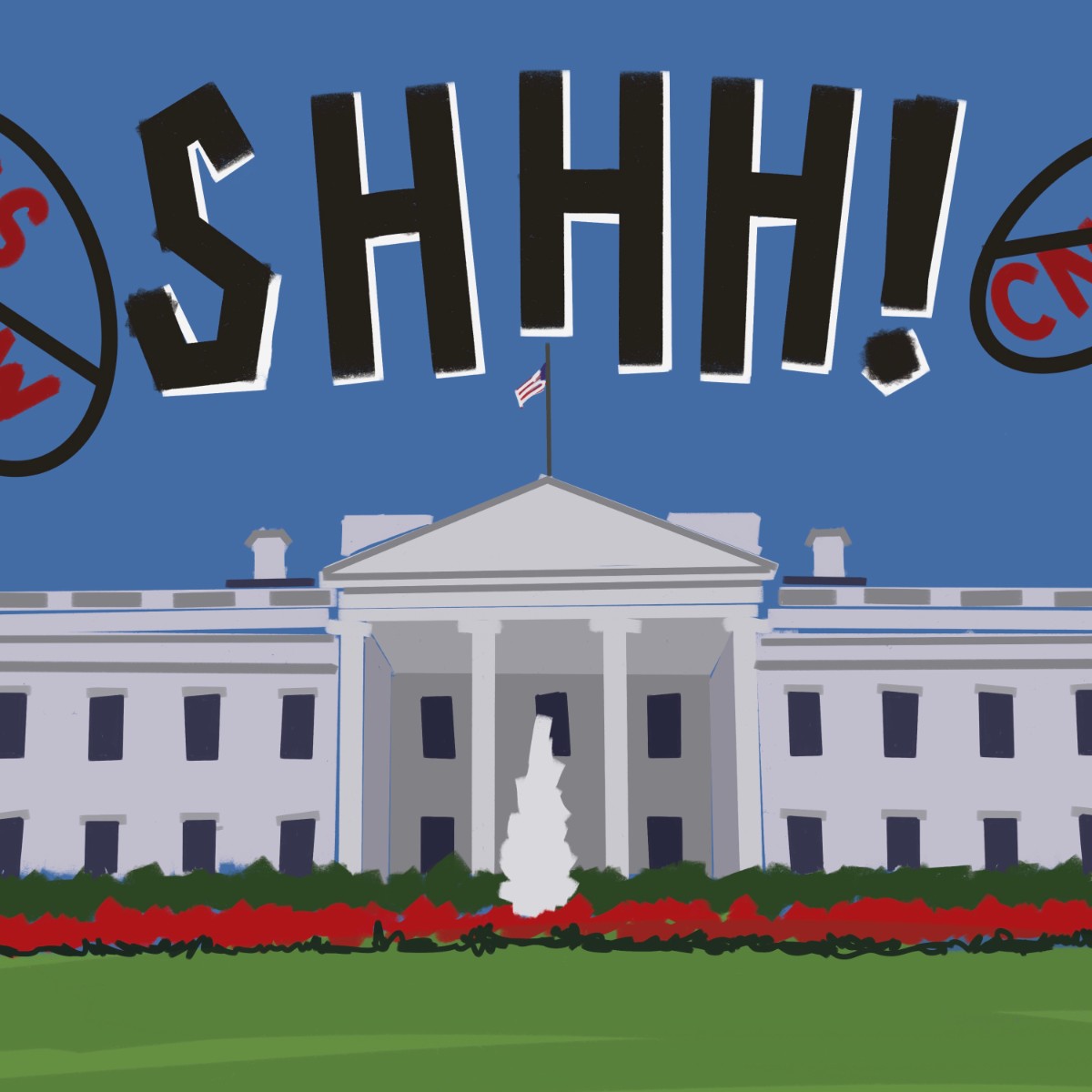
On September 18, President Donald Trump announced the ban of media outlets CNN, MS NOW, and Politico from the White House, citing “FAKE NEWS” and “National Security” threats. The next day, journalists from those media outlets were barred from entering the White House. Though Trump’s ban is currently temporarily restrained by the U.S. District Court (citing the administration’s lack of due process as a breach of the Fifth Amendment), this does not detract from the fact that Trump’s actions are a blatant attempt to silence the free press in direct violation of the First Amendment.
The First Amendment explicitly protects freedom of speech and press, a statement that is fundamental to the Constitution of the United States. At a time when political polarization is at a historic high and social media algorithms create echo chambers, media protections are ever more essential. Restricting media outlet access to push a specific narrative only deepens the political divide and worsens ideological blindness. If media outlets are not allowed to criticize the president without facing punitive treatment, then America is no different than China or Russia—whom Trump welcomes into the White House with open arms—where freedom of speech is nonexistent and the press is controlled by the iron grip of the state.
Although a president is within their right to rebuke critical claims made by media outlets, there is a fundamental difference between disputing information and punishing the press. Moreover, the administration has not provided any basis to the claim that the media outlets posed a genuine national security threat, and the president’s personal distaste for the press cannot justify the ban.
In 1971, the Nixon administration attempted to block The New York Times from publishing the Pentagon Papers, a then-classified study which covered how the preceding administration had deceived the public regarding the Vietnam War. In New York Times v. United States, the Supreme Court rejected the attempt, and later, through further investigative reporting from The Washington Post, the Watergate scandal was uncovered, exposing the power abuse that ultimately led to Nixon’s resignation. This situation illustrates the power of the free press in spreading information to the general populace, the responsibility of the American citizen to be politically active, and why protections for the press exist: to hold officials accountable.
This issue extends beyond the current administration and political affiliation. If the American public allows the president to exclude specific media outlets from White House grounds, future presidents may follow suit, preventing outlets from investigating corruption, questioning government policy, and holding politicians accountable for their misdeeds. The power used against news outlets today may be used against an entirely new set of organizations in the future.
Constitutional protection must always remain effective, even if the news reported is unfavorable of the current administration. Ultimately, the Constitution was designed to prevent any single individual from possessing unchecked authority. But that means little when there are no challenges from the courts, senators, and congressmen.
For over 250 years, America has existed under the notion that no person, including the president, exists above the law. The press should never risk losing its ability to criticize those who govern U.S. citizens. Preserving these principles requires more than simply words written on a document—it takes courts, legislators, and the public being willing to stand up and enforce safeguards, regardless of political affiliation. The White House does not belong to the president. It is the people’s house, and the press must remain unchained in order to hold its occupants accountable for their actions.