Pope vs. Trump
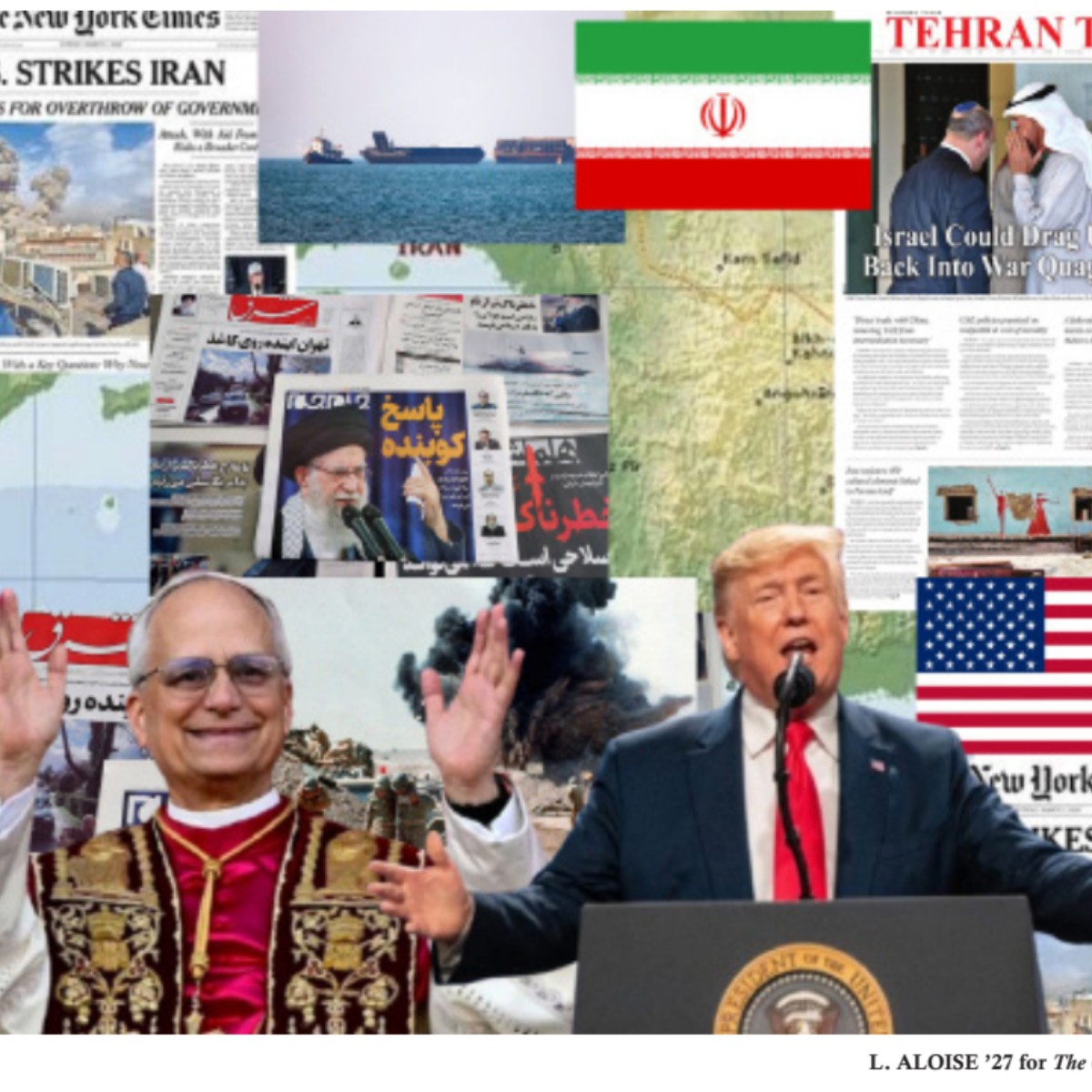
It’s not everyday that a pope, a president, and an AI-generated image of Jesus Christ end up in the same conversation.
Yet, in recent weeks a public dispute between Pope Leo XIV and President Donald Trump has taken the media by storm. What began as a reflection on war and moral responsibility quickly developed into a heated exchange that has been subject to widespread attention. As attention shifted towards this media-driven dispute, the space for meaningful engagement narrowed, and the reality of war was overshadowed by a focus on reactions and personal conflict.
Pope Leo has been speaking out against rising tensions between the U.S. and Iran, warning during a Vatican prayer service on April 11 that a “delusion of omnipotence” was fueling the conflict. Trump however, replied personally, calling the pope “terrible for foreign policy” and “weak on crime,” suggesting that he should “focus on being a Great Pope, not a Politician.” In a separate Truth Social post, he went further, questioning the pope’s legitimacy and implying that his election by the conclave was influenced by the church’s desire to maintain good relations with the president’s administration. The exchange escalated when Trump shared an AI-generated image on Truth Social depicting himself in a traditional portrayal of Jesus Christ, appearing to heal a sick person.
The image drew immediate backlash, with critics calling it sacrilegious and arguing that it misused religious symbolism and came across as mocking the central figure to Christianity. Given that many of the president’s supporters identify as Christian, the reaction also highlights a tension between the image’s message and the beliefs of many in his own base. Trump vehemently defended the post, claiming it symbolized him as a doctor from the Red Cross.
But by this point, the conversation had already drifted far from where it began. What started as a message about war and responsibility had turned into a debate over who said what, who meant what, and whether a viral image was appropriate. Public attention increasingly focused on the conflict between individuals despite the pope’s original warning on the moral responsibilities surrounding war. This warning was reinterpreted as a personal critique, and President Trump’s direct responses also reinforced that framing. The circulation of the AI-generated image only intensified this shift, drawing attention toward symbolism and controversy. And ultimately, the original issue that prompted the discussion in the first place— the violence the pope had addressed—faded into the background.
This exchange reveals a broader pattern in public discourse. Complex issues are often simplified into personal conflicts, where attention shifts from the substance of the issue to the individuals involved. The underlying tensions between religious authority and political power remain, but it is filtered through reactions, headlines, and viral content that reshape how the situation is understood.
Ultimately, this interaction raises a larger question: when attention is drawn so quickly to controversy, what happens to the issue that sparked it? In this case, the focus remained on the dispute itself and the reality of war was pushed aside, leaving attention centered on publicized personal conflict instead of the consequences of the violence the pope had originally warned about.