
Slam Poet Andre Bradford Visits Groton
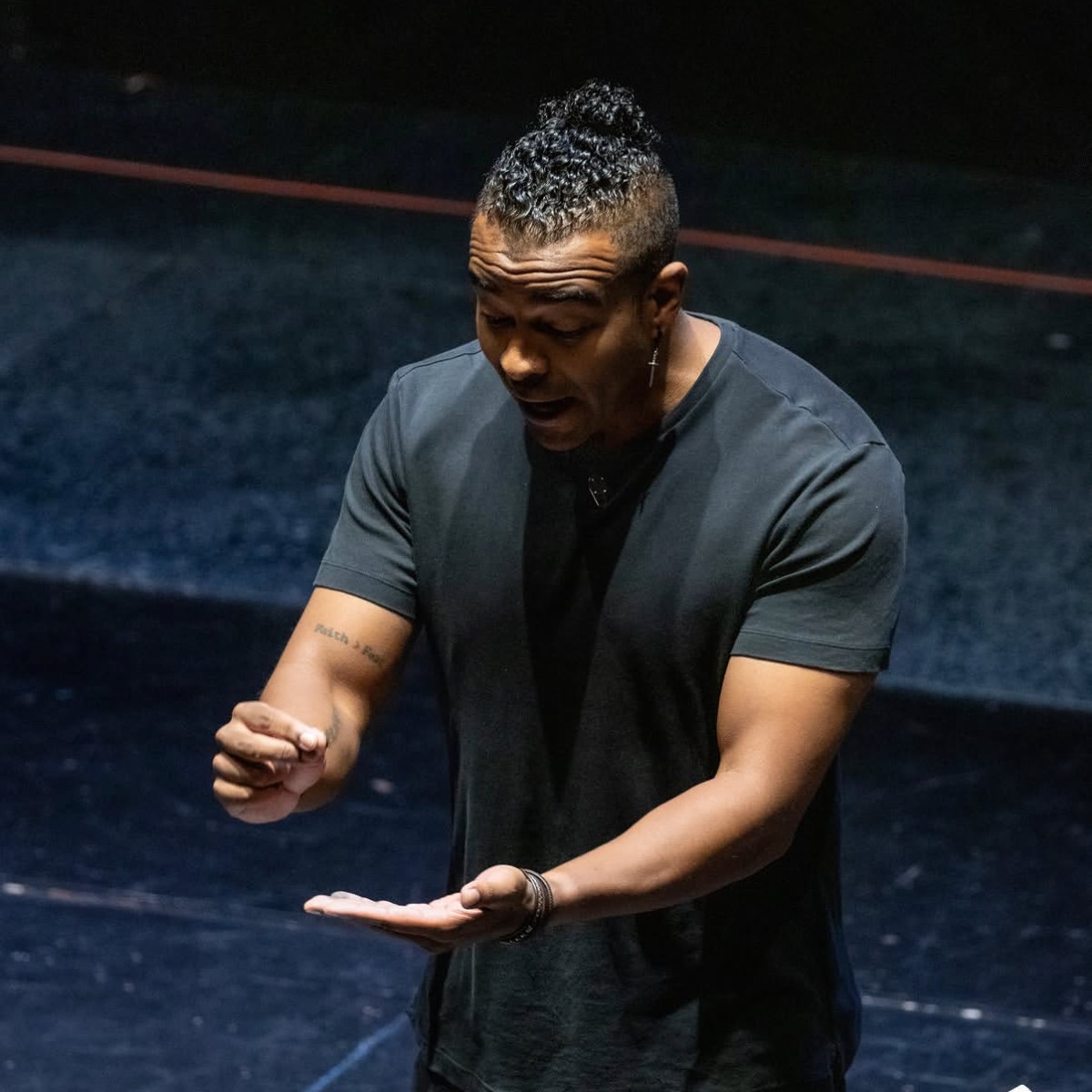
On September 29, slam poet Andre Bradford came onto the Circle to give the first Circle Talk of the year. Bradford, known by his stage name, “S.C. Says,” is a three-time winner of the Texas Grand Slam Poetry Award. Since discovering slam poetry in 2013, he has dedicated his career to performing and sharing the transformative power of empathy through storytelling.
Mr. Bradford writes to share stories from his own life, using lived experience to demonstrate the power of kindness and understanding in a world so frequently divided. In his poems, Andre shares stories of friends, strangers, and family to show the importance of understanding other perspectives.
As he puts it, “We all have so much more in common than the surface might suggest.”
How would you describe your creative process in writing a poem?
I’ll start with a line or an idea, and then morph it into more of a whole story. I like taking these weird, quirky ideas and turning them into a fuller story that gets people to see a topic in a new light. I don’t usually start with the beginning of the poem and write through to the end. I'll write until I feel like I don’t have anything else to give the poem, and then I’ll let that poem breathe.
What's your favorite memory in the world of slam poetry, performing or not performing?
There was a show I was doing in Connecticut. I finished the show, and there was this time for Q&A. Q&A’s can be really hit or miss because, sometimes, nobody wants to ask any questions, or they feel really awkward. There was a really long space where nobody said anything, nobody raised their hand. We were just sitting there awkwardly in silence. Then finally, this one little hand starts going up. She says, “You talked about your struggle with depression.” Then her voice cracks, and she says, “How did you survive?” I’ve seen how powerful this art form can be. I know personally how much I’ve been impacted and healed by other people’s vulnerability and bravery to share their story on stage. But to have her ask that question in that environment, so vulnerably, so honestly . . . to this day, that is still my favorite moment of doing this because that showed me that something I’m doing is getting through to the point where somebody finally has the bravery to ask a question like that. That is my North Star. I’m trying to perform well enough to get somebody to ask that question.
Is there anything special about the act of performing itself?
There is a very intentional moment that I try to set before I perform any poem, mainly because there’s this callback in the spoken-word poetry world where, before a poet will say their first word, somebody in the audience will say, “Remember why you wrote it.” I do that every single time that I start to perform a poem. I remember that I felt lonely, I felt isolated, I felt depressed or anxious—and by writing this poem, it helped me to heal, and my goal in sharing this now is to help somebody else. And so whether I mess up a line or whether I lose where I am, that’s what I’m trying to do, to make sure that somebody feels seen.
What is your biggest piece of advice for aspiring slam poets?
My biggest piece of advice is to become a consumer of poetry, as much as you possibly can. Read it, watch it, go experience it, see what resonates with you the most, and then when you start putting things down on the page, I think you might be surprised at how quickly it starts flowing out of you, because you know the style that you're already going towards. And then don’t lock into one style right away—mainly because your style is going to evolve, and so if you think, “Oh, I only write poems this way,” you might cut off a kind of poem that you will eventually lean into in your future. So just play around. Have some fun with it.
Does it ever get hard doing that, though? Like, laying your vulnerabilities out on paper?
There was a student today who was towards the back and just passed out when I was doing the poem about going to therapy. And that's tough, you know, because you're pouring a huge part of yourself out. But for every one of those, there are 10 to 15 students who will come up to me and just tell me thank you. Like, they don't even say anything else. They just come up, they look me in the eyes and say, “Thank you.” And they walk away, and I know exactly what they're thanking me for. It’s that poem that I talked about going to therapy or getting help. And that’s worth a thousand people asleep in a room.