
Sustainability in Secret: Groton’s Geothermal System
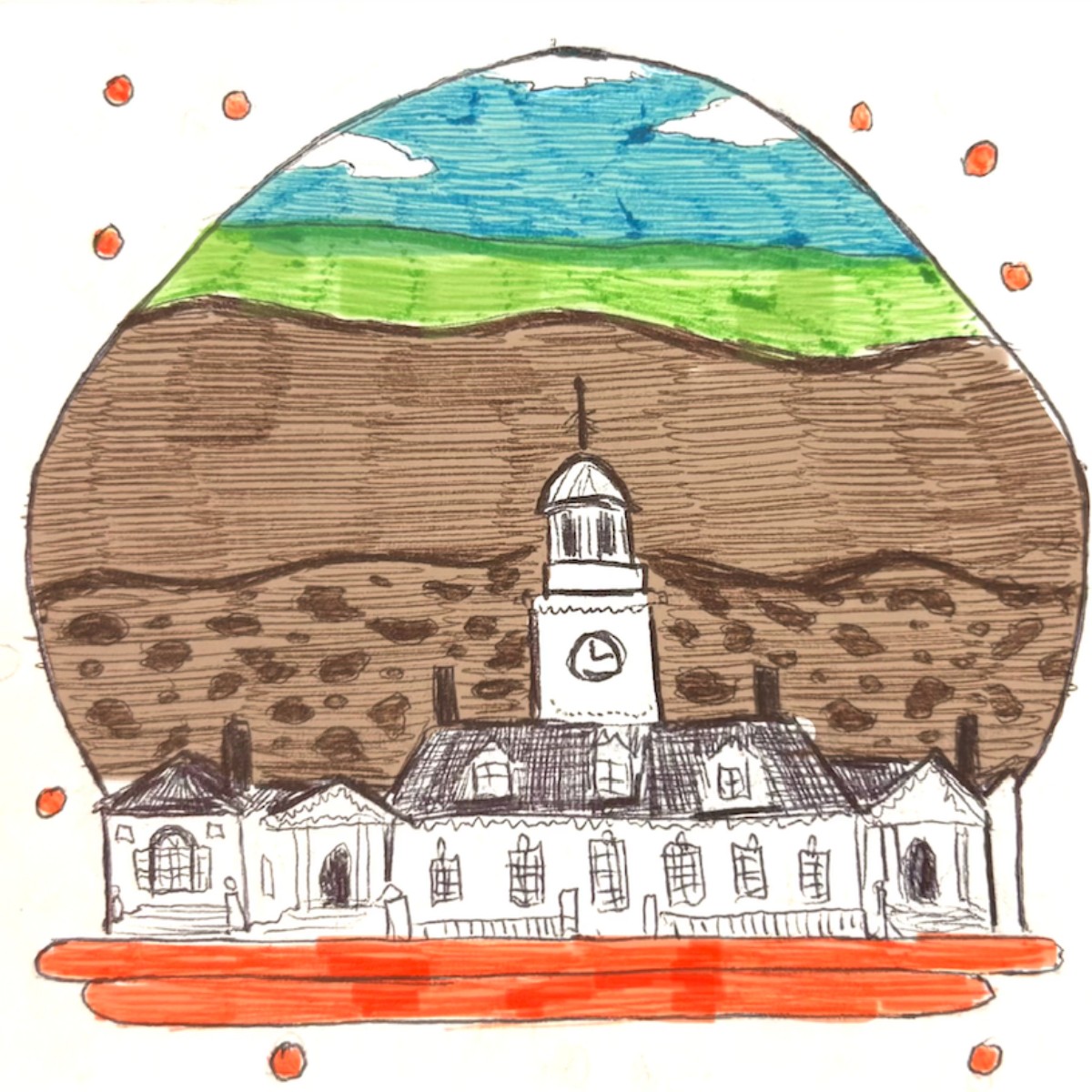
For more than 10 years, Groton has had a geothermal plant hidden underneath the Circle, which serves a simple yet vital task: keep New England’s scorching heat and bitter cold out of the Schoolhouse.
Despite its indispensable role, the plant’s nature and history remain largely unknown to Groton’s population today. To find out more about the system, we sought out Director of Buildings and Grounds Tim Dumont. According to Mr. Dumont, Groton’s geothermal system comprises an array of wells buried several hundred feet underground. At that depth, the ground remains roughly 50°F (10°C), regardless of the weather. The system capitalizes on this property by circulating a mixture of water and antifreeze through the wells in sealed pipes. In warm weather, this fluid transfers heat from the Schoolhouse underground, and vice versa during cold weather. Before the system was built, the Schoolhouse was heated by a steam boiler plant located in the Buildings and Grounds headquarters across the street from campus. Today, this boiler remains active, and is occasionally used to supplement the geothermal system on particularly cold days.
The geothermal system was added in 2014 amidst broader renovations to the Schoolhouse. The Forum, science wing, and math wing were added as part of that project, nearly doubling the Schoolhouse’s size to what we see today. During this time, following input from engineers, trustees, and faculty, the school decided to start using geothermal power for the Schoolhouse’s climate control.
Mr. Dumont cited sustainability as the primary factor behind this choice.
“The group made the decision that this was the right thing to do as opposed to burning even more fossil fuels and installing a very large air conditioning system into an historic building,” he said.
When approaching infrastructure projects of this scale, Mr. Dumont says, school leadership not only considers sustainability impact but also the cost of a given project versus its long-term payback. However, he noted that the geothermal system was an exception, saying: “There are times when the school will do a project because it is the right thing to do as opposed to being able to pay for itself.”
Even so, installing the geothermal plant was no small feat. Images provided by Mr. Dumont revealed the scale of the project. One image taken from the top of the Schoolhouse shows an enormous piece of the Circle, cordoned off and stripped of its familiar grass. Another image shows two drilling rigs used during construction. Several stories high, they tower over the nearby trucks and people.
While the geothermal plant provides essential climate control for the Schoolhouse, it also represents a major success for Groton’s sustainability initiatives. Compared to a traditional climate control system that relies on fossil fuels, Groton’s geothermal system has little environmental impact. It simply exchanges heat with the ground; this process consumes no fuel or water, and produces no physical waste.
Installations like Groton’s geothermal plant are built to last, with a typical lifespan of 50 to 100 years. For now, it sits silently under the Circle, reflecting a commitment to sustainability that has been, and will continue to be upheld for the betterment of our community.