TACO Again at Davos? What Trump May Have Achieved on Greenland
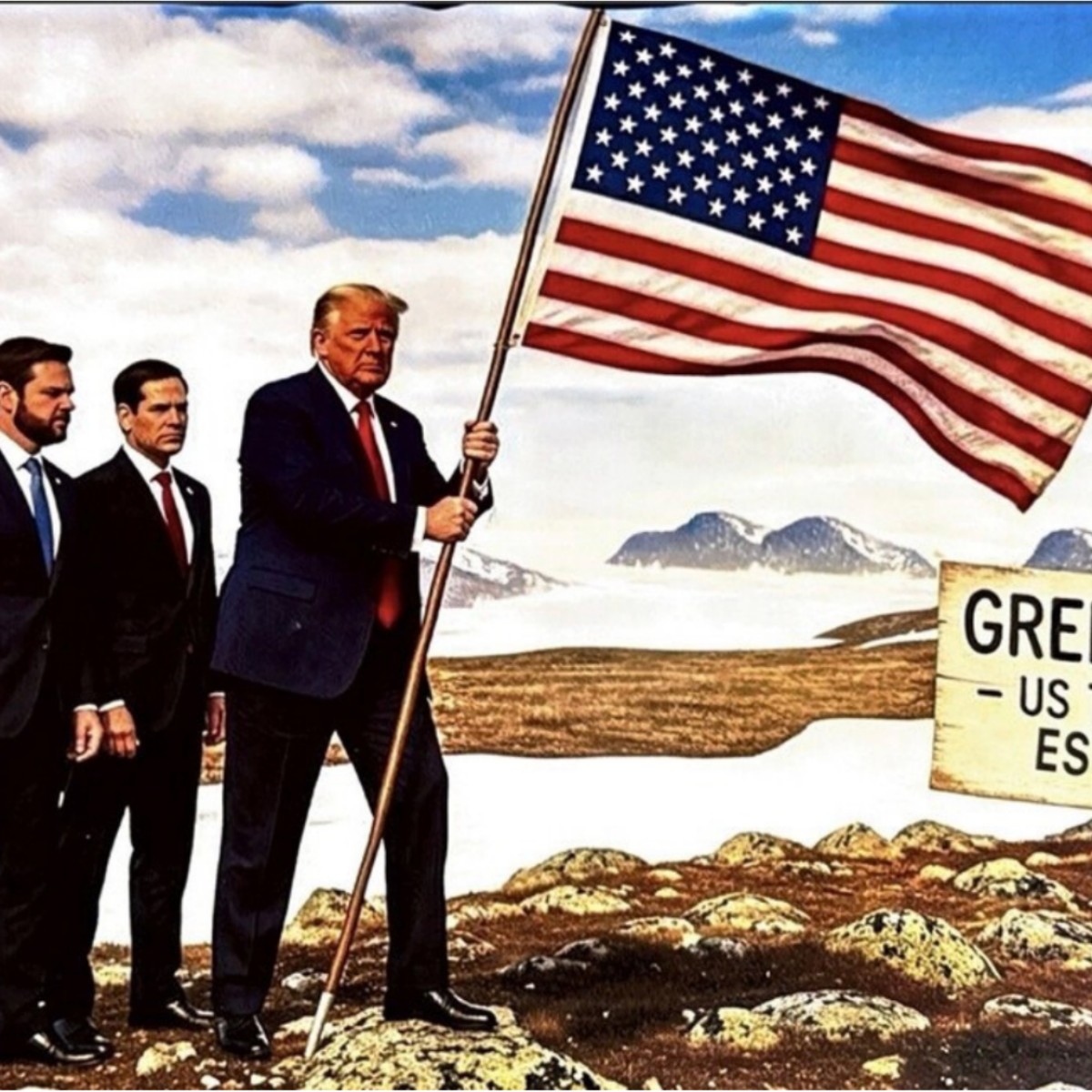
Major news outlets such as the New York Times have labeled President Trump’s attitude change at the 56th World Economic Forum in Davos as another “TACO moment”—short for “Trump Always Chickens Out.”
Trump said in the conference that no coercive measures will be taken because of the “tremendous respect for people in Greenland.” Besides that, he announced afterward that all the earlier threats against Denmark and its European allies have been paused for a framework of future cooperation on Greenland. To some, this move was Trump signaling retreat, a textbook “TACO.” However, while Trump’s moves on the international stage may seem immature or performative, we must ask whether his decisions have produced palpable strategic outcomes.
Greenland has continuously attracted international attention for actual geopolitical reasons that go well beyond modern rhetoric. As the world’s largest island with over 90 percent of its territory located within the Arctic Circle, Greenland entrenches a strategic position in the circle’s geopolitics. Benefiting from the ongoing global warming effect, new commercial transportation routes will be unveiled in Arctic regions where Greenland sits. The United States’ predating presence in Greenland further proves that today’s conflict isn’t caused by Trump’s impulses. America attempted to militarily protect Greenland for over two hundred years, occupying a spot in the Greenland-Iceland-United Kingdom (GIUK) gap—a crucial passage for monitoring naval activity and securing the transatlantic defense lines. Being motivated by that, the Pituffik Space Base (formerly called Thule Air Base) had operated for decades as a key component of the “golden dome” global missile warning and space surveillance system.
Beyond its geographic advantage, Greenland’s resource potential has become increasingly relevant. According to data from the U.S. Geological Survey (USGS) and the European Commission, Greenland possesses over 1.5 million metric tons of raw mineral deposits, encompassing most of the 34 critical or moderately important minerals defined by the EU. In other words, Greenland will be crucial for technology and defense industries, especially in light of current geopolitics: China currently dominates 70 percent of global rare-earth production and 90 percent of processing capacity. In this context, Greenland’s mineral reserves may be a long-term alternative to Chinese ore—strategic insurance for America’s future.
From the security perspective, the Arctic more broadly has emerged as a growing focus of another “arms race.” Russia, with its territorial advantages, maintains the region’s most extensive military infrastructure and has expanded both its defense posture and energy development in the Arctic. In response, U.S. policy circles—on both sides–have agreed on emphasizing the necessity of strengthening Arctic surveillance and cooperation with Nordic allies.
Against this backdrop, CNN expresses that Trump’s moderation at the WEF may have reduced tensions, opening space for future coordination. Admittedly, the tension appears to have shifted, while U.S. interests are also being satisfied. Once it grew evident that tariffs would not succeed, tough rhetoric became a tool, exerting pressure to establish a dominant position prior to diplomatic engagements. President Trump is taking advantage of the sequence of events as a stepping stone to strengthen the U.S. Arctic deployment, diversify resource supplies, and counterbalance other countries’ influence. That’s a strategy that resembles earlier U.S. doctrines emphasizing regional influence and security interests.
While Greenland’s strategic value is undeniable, all the historical experience suggests that lasting prosperity depends on the respect for sovereignty, international norms, and alliance reciprocity. Treating territories merely as strategic assets risks the peace that the diplomacy wants to protect. Therefore, as U.S. policymakers face Greenland’s role as a strategic node, they must comprehensively consider safeguarding national interests while respecting autonomy and the law.
For us, this case proves that international politics cannot be simply concluded by victories or retreats, but rather is an ongoing negotiation shaped by moral restraint and responsibility.