
The Past, the Pentagon, and the Future of Journalism: A Conversation with Eleanor Watson ’13
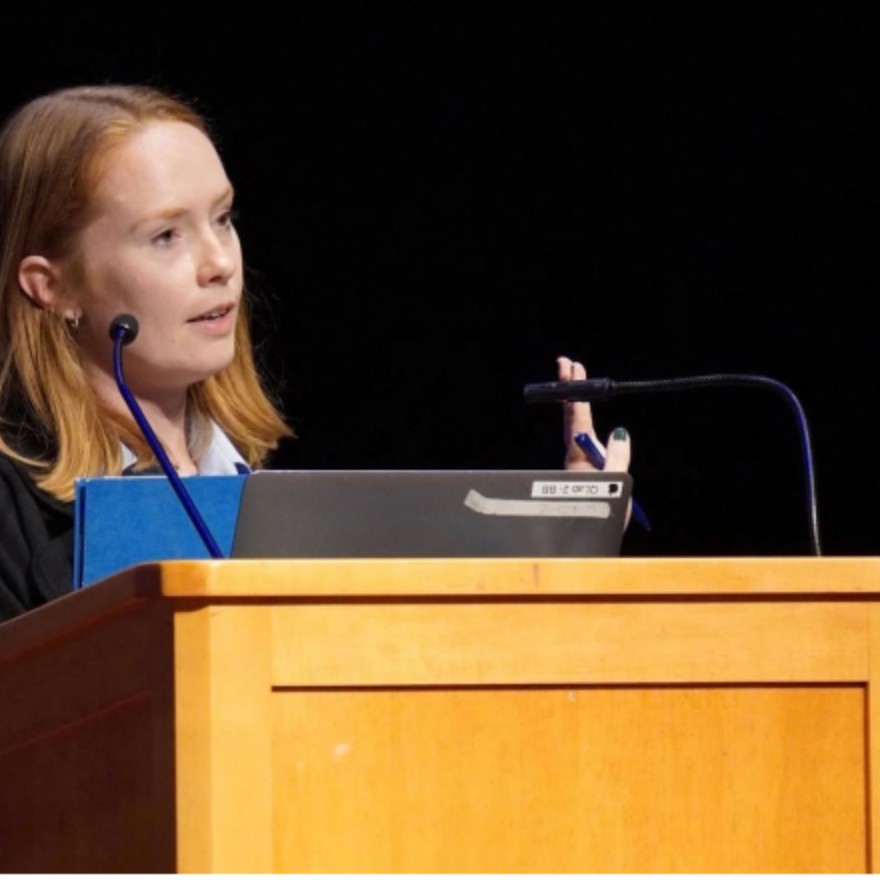
We often consume national security news through brief, fast-paced headlines, but the actual work of a Pentagon reporter requires navigating a massive bureaucratic maze to find the truth. Beyond reporting the story, there’s a meticulous process behind it: verifying sources, contacting the right individuals, sorting through conflicting information, and deciding what the public needs to know to understand a story. On September 6, we spoke with Eleanor Watson ’13, a reporter and producer for CBS News covering the Pentagon, about what that process looks like. A Groton alum, Watson also kicked off the 2024–25 Circle Talk series, sharing her experience covering the 2020 election for CBS and working on the network’s national security team. We covered the realities of the Pentagon beat, including how she handles source verification, government pushback, and the rise of AI in the news. Watson also looked back at her time at Groton, sharing the specific skills that prepared her for a career in journalism. Below is an abridged version of the full interview.
When you’re reporting on a major national security story, how do you decide when a source is credible enough to put information in a story, especially when different sources are telling you different things?
That’s an important question. On a major story, it really depends on your relationship with the official you’re talking to, what they’ve demonstrated in the past. And if other sources are telling you other information, it’s a responsibility. You have to deconflict those, figure out, maybe by asking more questions, why one person is saying one thing and another person is saying a different thing. You would need multiple sources saying the same thing in order to report that. If you have three different people saying three different things, you can’t report any of those.
When you spoke at Groton in 2024, what did you think your work would look like in the years ahead? What turned out to be completely different, if anything?
I remember there was a great question that asked how the election will impact my job. I think the answer I gave was, it won’t impact my job, but it may impact what D.C. looks like. And I do think that since that talk, there has been huge change in the Pentagon press corps. We’ve been kicked out of the Pentagon, and so that’s made the job different. The type of news we’re covering increasingly involves policy more than operations, because Secretary Hegseth has a mandate to change the culture at the Pentagon. That was not something I was necessarily expecting.
What do you think the future of journalism looks like for you right now?
The future of journalism that I see, and I may have mentioned this in the Circle Talk, is I do think there is an appetite for not the daily news summary, but the longer-form pieces. I think that journalists will put more of their effort into longer form pieces that actually give more context about an issue. There will still be the daily news, that’s important, but I think that more and more the resources will go towards making sure that there is a product at the end of the day that can live on until next week and still be of interest in your work.
Do you think that in recent years, the way people have approached reporting news has changed? Alongside that, do you think the way people have consumed or viewed news and journalism in general has changed?
I do think people can choose their news more and more, and I’m even guilty of this. I pay attention to Pentagon things. I may not always know what’s happening, for instance, in the House of Representatives, because you can silo yourself more and more into what you’re interested in. I think that is not necessarily a recent thing. I think since the news has gone online, you don’t get the full newspaper effect of reading different stories that may not have interested you when you first picked it up. I do think that has an impact on the way that we’re starting to change how we report to make sure that people still go to the long form but are piqued in interest by the short form.
If a high school student wanted to become a journalist covering national security or foreign affairs in the future, what skills or experiences would you recommend developing now?
The biggest thing that I tell people is, make sure you read a national security story in different papers or even some of the online outlets. Read the same story, and what I mean by that is the same news event. So, for instance, if there is a bombing in Iran that is getting a lot of attention, make sure you read how each outlet covers that, because they’ll include different details so you get a more holistic picture of what’s happening. I did that when I was an intern and an assistant, and it gave me more background knowledge when it came time for me to ask the questions and to report out the facts.