The Reintroduction of Hacky Sack – NEPSACKS
With the spring term in full swing at Groton, students can often be found on the Circle playing lawn games. In years past, classic lawn games like spikeball and cornhole have dominated as the most popular pastimes. This year, however, a new game has emerged: hacky sack. Dubbed “sack,” the game involves keeping a small, weighted ball in the air for as long as possible by hitting it with any body part besides your hands.
When the primary source of interaction between schools is through athletic competition, rivalries and discontent naturally grow. By shifting focus to more collaborative interactions across school communities, hacky sack diffuses this competition, creating friendlier relationships among schools. One of Groton’s finest sackers, Jacob Mederios ’26, praised sack for its ability to bring people together, saying, “Spread sack, not hate.”
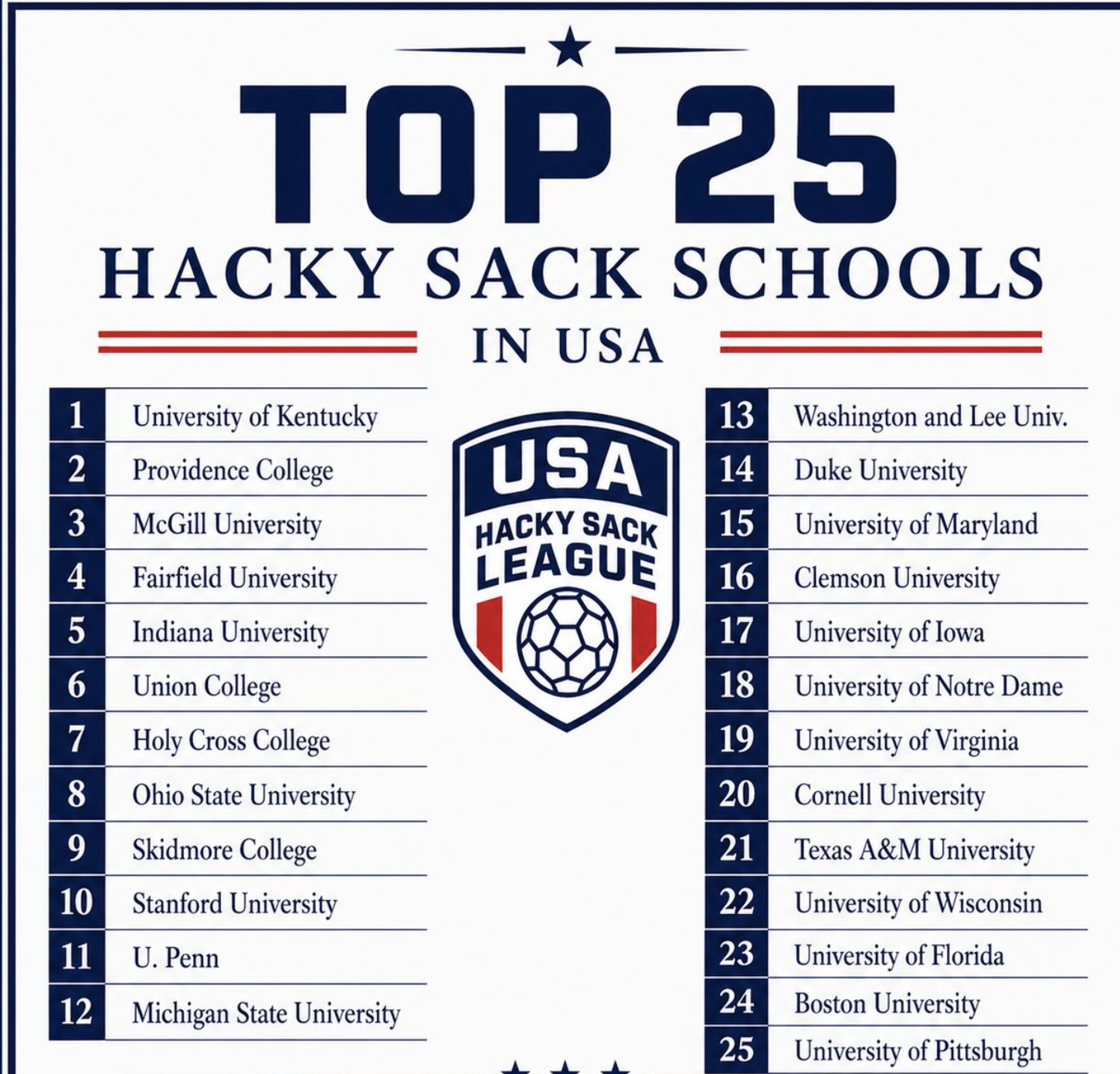
What began as students kicking around a small beanbag has evolved into a surprisingly organized interscholastic community. There are now ISL-wide rankings, as well as rankings for all of Massachusetts. These rankings are determined by the difficulty and creativity of moves, called “stalls,” where players briefly balance or control the sack before passing it along.
This intramural competition has spread like wildfire, with entire Instagram and TikTok accounts dedicated to posting clips in hopes of climbing the ranks. After a recent boys varsity lacrosse game against Nobles, Nobles Hacky Sack posted the first-ever collab of Groton and Nobles students indulging in a friendly game of hacky sack. Regardless of the game score, the school name on their jerseys, or any conflicts that happened on the field, this simple yet powerful game transcends rivalries and connects all communities.
“Sack is so simple, yet it brings people together,” said Nicco Samson ’27. “I feel like the fact that it's something that is so trivial yet able to bring people together from all forms and schools makes it so special.”
Still, Nicco admitted there can be a downside. As with almost anything at Groton, there are moments when the competitive spirit sneaks back in. Occasionally, what begins as a casual circle transforms into a tense showcase of who can perform the most complicated move while pretending not to care—otherwise known as acting “nonchalant.”
Despite sack’s reputation as a welcoming activity, not all students feel equally passionate about it, bettering our community. One of the problems with hacky sack is that for many students, primarily female students, hacky sack is so far dominated and enjoyed almost exclusively by male students. This imbalance creates an unfortunate contradiction: the very pastime intended to bring people together can sometimes leave others feeling excluded.
“Hacky sack can be disruptive,” said Fifth Former Nora Wilson. “It typically takes place in very public places and often involves yelling, flying balls, and diving bodies.” Nevertheless, Nora is not alone in expressing interest in the sport, and no one can deny the joy and positivity it brings to those who partake.
Whether hacky sack will become a passing trend, like cornhole or spikeball, or a memory to reminisce over in years to come, is still a mystery. The bigger question is this: what will the future of hacky sack look like at Groton? Is it just an excuse to avoid your homework? Or is it part of a larger movement that will change interscholastic interaction for the foreseeable future?