
Views From the Circle: An Examination of Groton’s Past
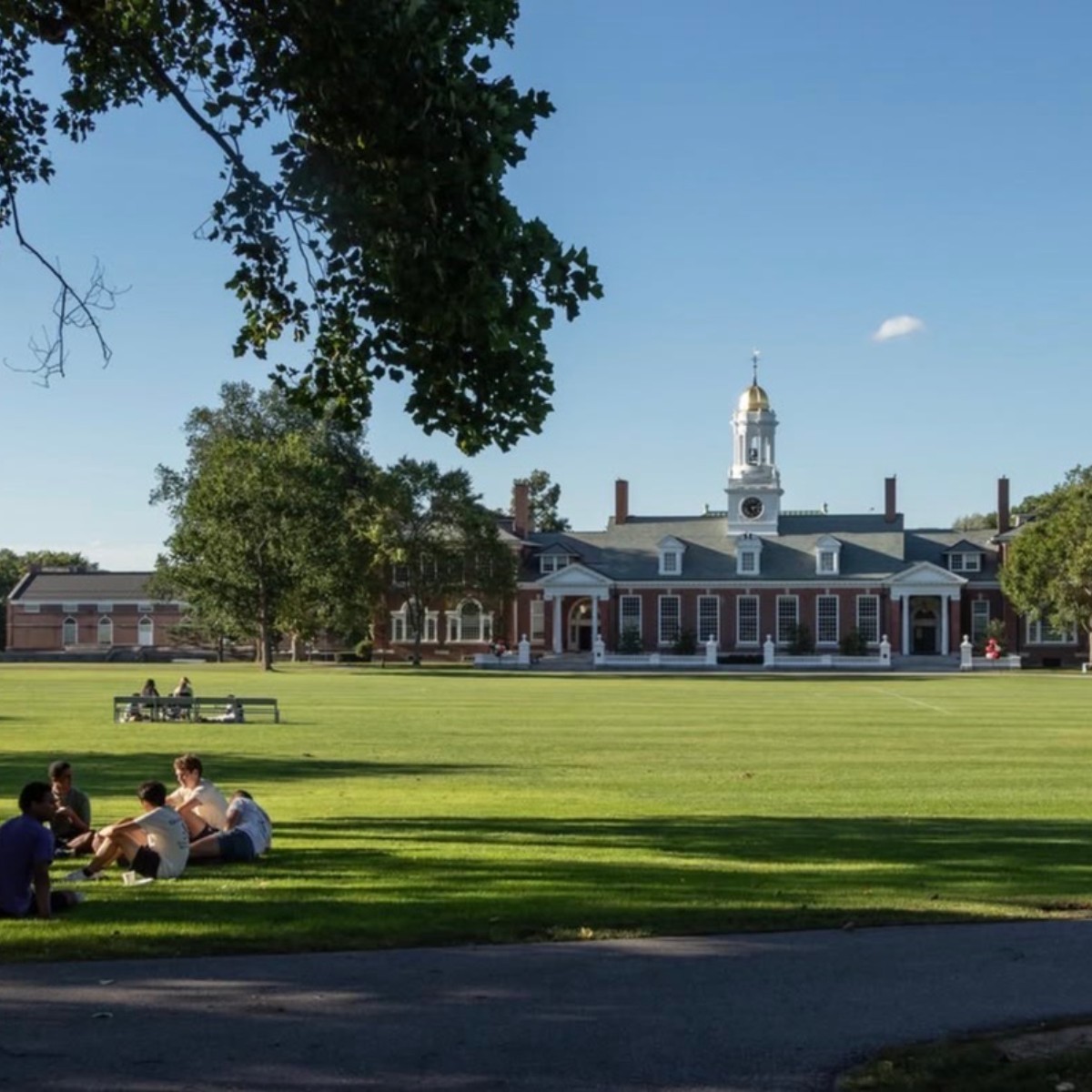
“To be asked to comment on so vital and familial an institution as Groton School is like being asked to write to the newspaper about the inner relations of a neighboring family,” begins Erwin Goodenough, professor of the History of Religion at Yale, in an essay about the school in 1959.
Goodenough was the father of three Groton alumni, Ward, John, and Daniel, who graduated in 1937, 1940, and 1962, respectively. His writing appears among that of many other Groton teachers, students, and parents in Views from the Circle.
Published by the Board of Trustees in 1960 for Groton’s 75th anniversary, the book features a multitude of stories and perspectives. Yet, they all repeatedly emphasize two defining features of the school: a community that resembles a family and an education that is rigorous and holistic. Today, with Parents Weekend approaching, we examine the experiences of some past Grotonians, which continue to find parallels in the present.
Henry Howe Richards arrived on the Circle in 1889. He recalls how the boys’ sorrow of being separated from their mothers was quickly replaced by joy of each other’s company: “Young Stuart Heintzelman, looking down and poking at the gravel with his toe, said to me, ‘It’s kind of hard to have your mother go.’ I murmured something in assent, and then he said, ‘I’ll race you to the Gym!’ I forget who won, but that was the end of my homesickness and, I dare say, of his.”
After graduating from Harvard in 1898, Richards returned to Groton to teach Latin and English for 43 years. Today, at Groton, students form connections through the same informal interactions as Richards had with Heintzelman more than 100 years ago. They not only become friends with each other, but family away from home.
Meanwhile, other alums observe how teachers often play the role of parents in education. John H. Finley Jr. was a professor of Greek literature at Harvard and the father of John H. Finley III, who graduated in 1954. He argues, “Parents refrain from teaching their children not because they do not care but because they care too much.” So they instead leave the responsibility to teachers.
At school, Finley describes, students find “a kind of father, a man who does what the actual father in certain moods would like to do but fears that through inexperience and especially through emotion he would do badly.” Teachers support the growth and development of students constantly, whether it is in the classroom, dorms, or sports fields.
And as Goodenough indicates, teachers also bestow students with the ability to support one another. He writes, “It is highly important, however, not only that the young genius develops his special gifts, but that he learns to live in human society and adjust to his fellows by appreciating their merits.”
More than anything, Groton is a community where people lift each other up. It is through cooperation that students overcome challenges. John deKoven Alsop, who graduated in 1933, writes that the school’s education “was not only intensive, it was extensive.” Many students can testify that it still is, but at least they are in it together. Looking back, Alsop acknowledges the benefit of Groton’s rigor: “Like plunging into a cold shower every morning, it is probably quite healthy, and you feel so well when you get out. And now, many years later, the words of Virgil have come true, ‘Forsan et haec olim meminisse iuvabit.’”
Although much has changed since 1960, Groton still remains a tight-knit community that fosters learning and growth. Groton is still a place where students acquire knowledge, form long-lasting friendships, and find their second home.